Much of the work that I do in Honduras involves educating women about possible birth control options. I tend to begin my “birth control spiel” by asking women how many children they have, followed by asking them how many they want in total. It is often the first time that these women have ever been asked to think about how many children they want. It’s the first time that someone has posed the subject as a choice. The women get confused and don’t know how to answer so I usually volunteer something like, “For example, I want three children. But the mother of the family I am living with here thinks that is too many. Many women only want to have one or two children.” The women usually laugh at this. They ask me how many children I have now. I respond that I do not yet have even one child. They ask me how old I am, and when I answer 23, they are shocked and confused. “Why?” they ask. I tell them that my boyfriend and I use birth control because we are not ready for children yet. I tell them that I wanted time to travel here to work with them and that I still want to go to another two years of school.
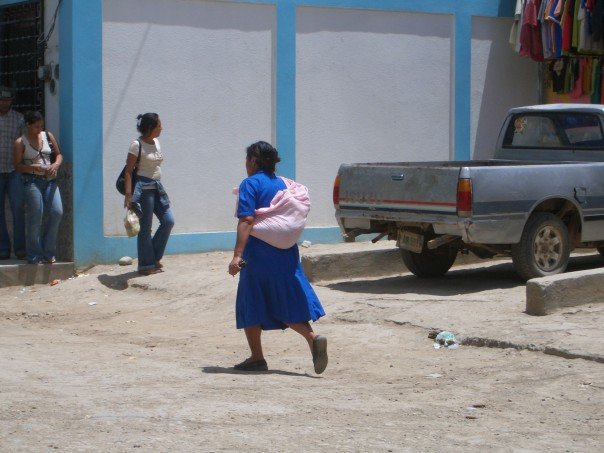
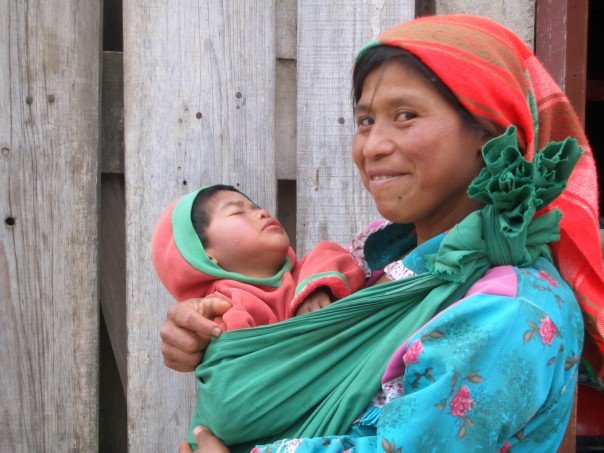
The other day, when I explained this to a group of women in the pourperio (the area in the hospital where women recover after giving birth) one of the women sat up and said, “You could still have a child, you could just do what everyone here does and strap him to your back and go about your traveling and studying.” Everyone got a huge laugh out of this. I explained that I understood that was how women did it here, and that I admired their strength, but that for me, it would just be too difficult. Children can be a lot of work, and women should decide how many they want to have, and when they want to have them.


Posted in Honduras, Public Health, Travel | 1 Comment »
A doctor, a female patient, about 18 years old, and a translator are sitting around a table in a make-shift rural clinic. The doctor is holding an intake sheet that indicates that the patient suffers from headaches.
Dr.: “Can you please ask her about her headaches?”
translator: “Tiene dolor de su cabeza?”
patient: “Sí.”
translator: “She has headaches.”
Dr.: “Can you ask her where it hurts.”
translator: “Puede enseñarme donde está el dolor?”
patient: “It starts here in the front and moves all the way back and into the back of my neck.” She uses hand motions to demonstrate where she has the pain.
translator: Says nothing, assuming that the hand motions were clear enough and momentarily forgetting that the doctor doesn’t speak Spanish. The translator turns to the doctor awaiting the next question.
Dr.: “What did she say?”
translator: “Oh right, sorry. She says that she has pain that starts here in the front, and moves to the back of her head and down to her neck.” The translator mimics the patient’s earlier hand motions.
Dr.: “Can you please ask her if she has sensitivity to light?
translator: “Cuando usted tiene el dolor de cabeza, tenga usted problemas con la luz?”
patient: “No”
translator: Forgetting that the doctor does understand “no” the translator turns to the doctor and repeats, “no”
Dr.: “Can you ask her if she has sensitivity to sound?”
translator: thinking — oh man, what is the word for sound? The words for to listen, to hear, ear, fill the translator’s mind, but no sound….the translator asks, “Lleva, usted, cosas pesadas en su cabeza?”
patient: “Sí”
translator: “Cuales cosas?”
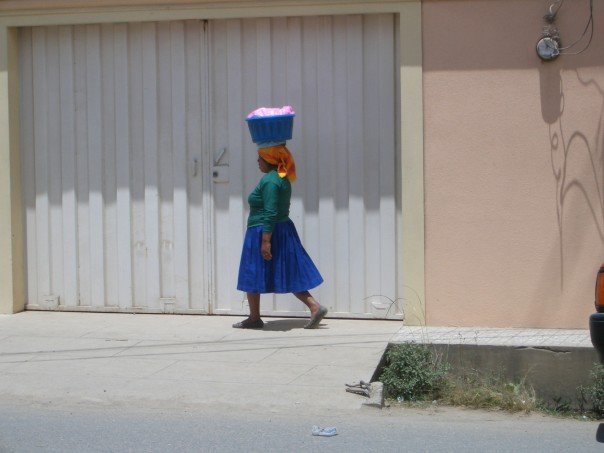
patient “tela, leña, agua, y comida.”
translator, do the doctor: “She carries cloth, wood, water, and food on her head.”
Dr. “Oh.” The doctor kindly does not insist that the translator repeat the question about the noise. And instead prescribes some ibuprofen and that the woman make her husband carry some of the heavy things.


Congratulations are in order for Denver WIC. I just received word that my wonderful ex-office mates saw over 10,000 clients in February! That is 10,000 women, infants, and children who are healthier because of you guys. That is pretty incredible stuff, keep up the good work.
Posted in Public Health, Thoughts |
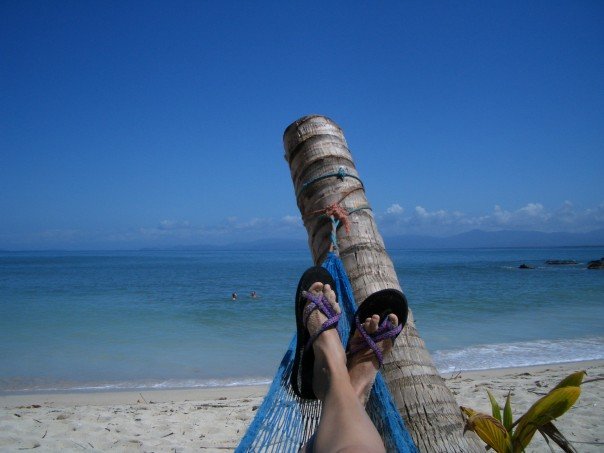
Last weekend we headed to Tela, a beach city on the north coast. The city boasts access to white sand Caribbean beaches, the world’s second largest botanical gardens, one of the country’s best national parks, and several Garifuna villages. Garifuna isa culture that resulted from a collision of native Caribbean people and shipwrecked and escaped African slaves. We hit the gardens, and the national park, and still had time for relaxing in hammocks on the beach, dancing to the wee hours of the morning, and eating pizza (we have all had about as much of the plato tipico as we can handle.)
The Lancitilla Botanical Gardens were planted in 1925 by the United Fruit Company. Supposedly, both to determine which fruits would grow best in Honduras, and also as a conservation effort. It is an impressive project. For whatever reason, the company imported several poisonous fruit trees. All of the guidebooks had warnings about the poisonous fruits, and not to touch anything marked with a skull and crossbones. My host family also warned me not to eat any of the fruit (not actually much of a concern as it is not fruit season). And as we walked into the park, the woman at the information booth had one important piece of advice — don’t touch the trees marked with a poison symbol. All of those warnings, combined with the skull and crossbones on the marker in front of the trees, encouraged us to keep our distance. Upon my return, I learned that everyone is so concerned about the poisonous fruit because, apparently, one of the park employees ate a piece of it a few years ago and died. The fruit is not messing around.
Our second day we took a guided tour to the Jennette Kawas National Park, Punta Sol. The park is widely held as the best in Honduras. Jennette Kawas was a Canadian working to conserve the wilderness areas around Tela when she was murdered in her Tela Home in the mid 1990s. Rumor has it that she was killed by high ranking military officials who wanted to develop the land for tourism. Her killers have never been caught. Shortly after her murder the area was officially named a national park and given her namesake. We hiked through the jungle, learning about the poisonous spiders that lined the trail, “When one of those bites you, you start to feel faint, feverish, and like you are going to throw up. Then your heart stops. But it doesn’t stop that fast, we have time to emergency you to Tegucicalpa.” explained our guide. I kept my distance from the spiders. We also saw poisonous lizards with big red things that they puff out around their necks when they are mad or scared. All I could think of was the scene with the spitting lizard in Jurassic Park. The lizards can jump from the trees to attack when they were scared or defensive. I made wide arcs around their trees. The highlight of the trip for me was seeing the wild howler monkeys. We saw about 10, one of them a mother carrying her infant. Our guide howled with them a bit, but they weren’t very conversational. We stopped for a rest on punto escondido, one of Captain Morgans famous hang-outs. Supposedly his treasure is still buried on the shores there, though we didn’t have time to start looking. We spent the rest of the afternoon lounging on beaches and in hammocks and swimming in the Caribbean Sea. We ate full fried fish cooked up in the small village in the park (pop. 16).The villagers are allowed to live in the park because they were there before it was converted to a national park. There are some children in the village, but they do not attend school, because the nearest one is a 3 and half hour walk through the jungle.
Overall, it was an amazing (long) weekend and one that prompts my boyfriend to point out that I am on vacation. I am so glad that I have had the opportunity to spend some time here volunteering and getting to travel around the country. I will be working the rest of this week in La Esperanza, and bringing in the food to the women in the Albergue tomorrow. The women remain incredibly grateful for the food and the education and I just want to thank all of you again for your donations. Next week is Semana Santa (a week long party in celebration of Easter). Virtually no one has to work next week, and I am planning a trip to visit a friend in Costa Rica.
Buenas tardes y adios,
Erin
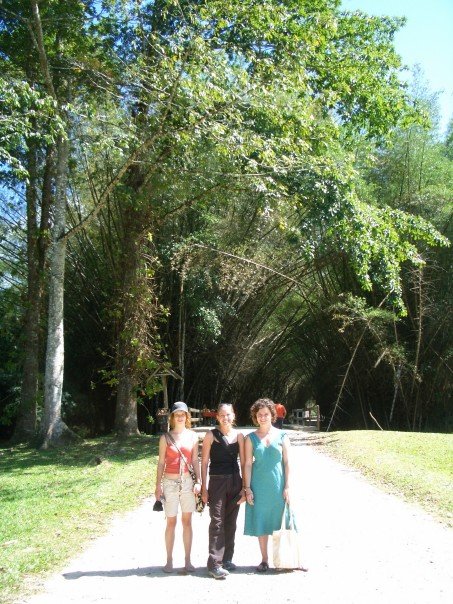
The Lancetilla Botanical Gardens

Don’t eat!
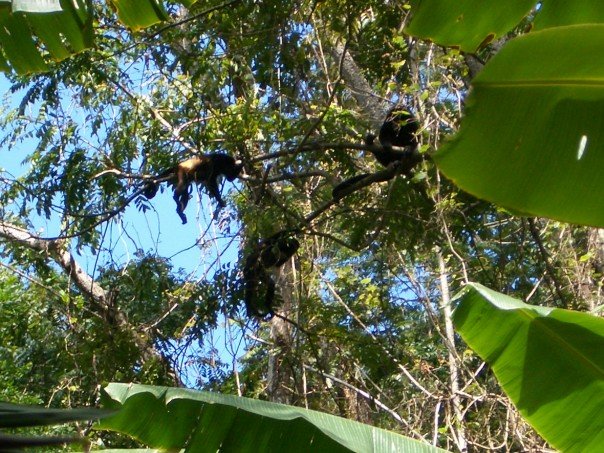
Howler Monkeys!
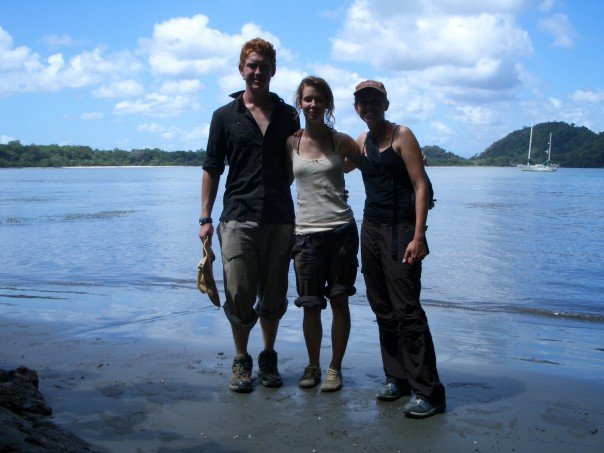
Punto Escondido

Village, population 16
Posted in Honduras, Travel | 2 Comments »
After writing my entry on los animales de honduras, I realized that I actually left out all sorts of daily interactions with animals. I was able to add the part about the horse blocking my passage through the gate infront of our house. But I feel like el ganso deserves an entry of her own. Of all the animals at my host family’s house, the goose was one of my favorites. When someone walked outside with a plate full of old vegetables and fruits, the goose would start quacking loudly, screaming in excitement. Yesterday, I brought home the old and smashed strawberries from lunch to give to el ganso. But when I asked our housekeeper if I could take them outside for the goose, she said “No, you can’t.” “Por que?” “The goose died.” She said it so casually that I initially thought she was kidding. We remain unsure of what caused the death, the goose was only 2 years old. Apparently the family use to have two geese, but the dog Bola (the one that now has a brood of puppies) ate one of them when she was a puppy. Anyways, me gustó el ganso, and I am sad that she is gone.
Just wanted to let everyone know that I will be Manhattan-bound this fall. I have been admitted to the Mailman School of Public Health at Columbia. If anyone who may read this has any great ideas for living arrangements in the city that will accommodate both me and my 55lb standard poodle, I would love any tips I can get. I hope that the admission-decision-season is going well for everyone who applied and I wish everyone the best of luck.
Posted in Thoughts | 4 Comments »
Hi, I’m Erin
search this site
Pages
- Resume
- Writing
- Regulation of Associated Health Plans
- Tackling Obesity through Agricultural Policy
- Facilitating Access to Reproductive Health Care for Urban Teens
- Letter to the Editor re: DIA Redesign Plans
- Infant Health in Wigan, England during the First World War
- An op-ed — with the swipe of a pen, 25 percent of American children eat more vegetables
-

Yes, I tweet, sort of
Tweets by erinashmiller-

Top Posts
Tags
ASPE Dan engagement family friends Grad School health policy Honduras Italy life new years New York City preparedness Public Health Recipes South America study abroad techy stuff Thoughts tourist sites Travel Washington DCCategories
- Health Policy (5)
- Honduras (33)
- Italy (15)
- New York City (25)
- Public Health (32)
- Recipes (2)
- Reviews (1)
- Seattle (4)
- Thoughts (72)
- Travel (62)
- Washington DC (15)
My projects
Volunteering Links
Other Links
 You can get to
 Erin Miller