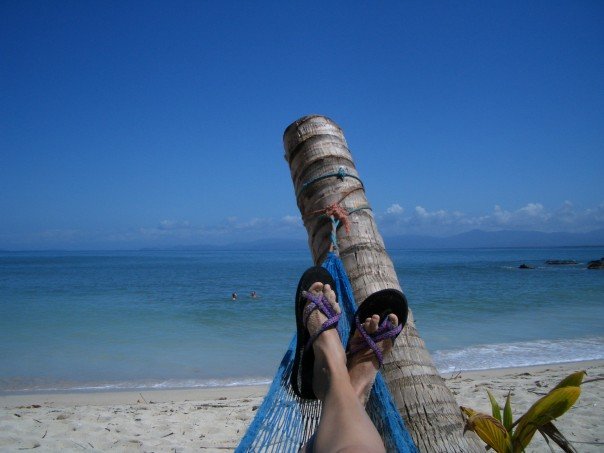
So, after my last post on my adventure in Costa Rica, I felt like it would be a good time to discuss some of the work I have been doing here in order to convince everyone that I am not just sitting in hammocks and swinging through canopies.
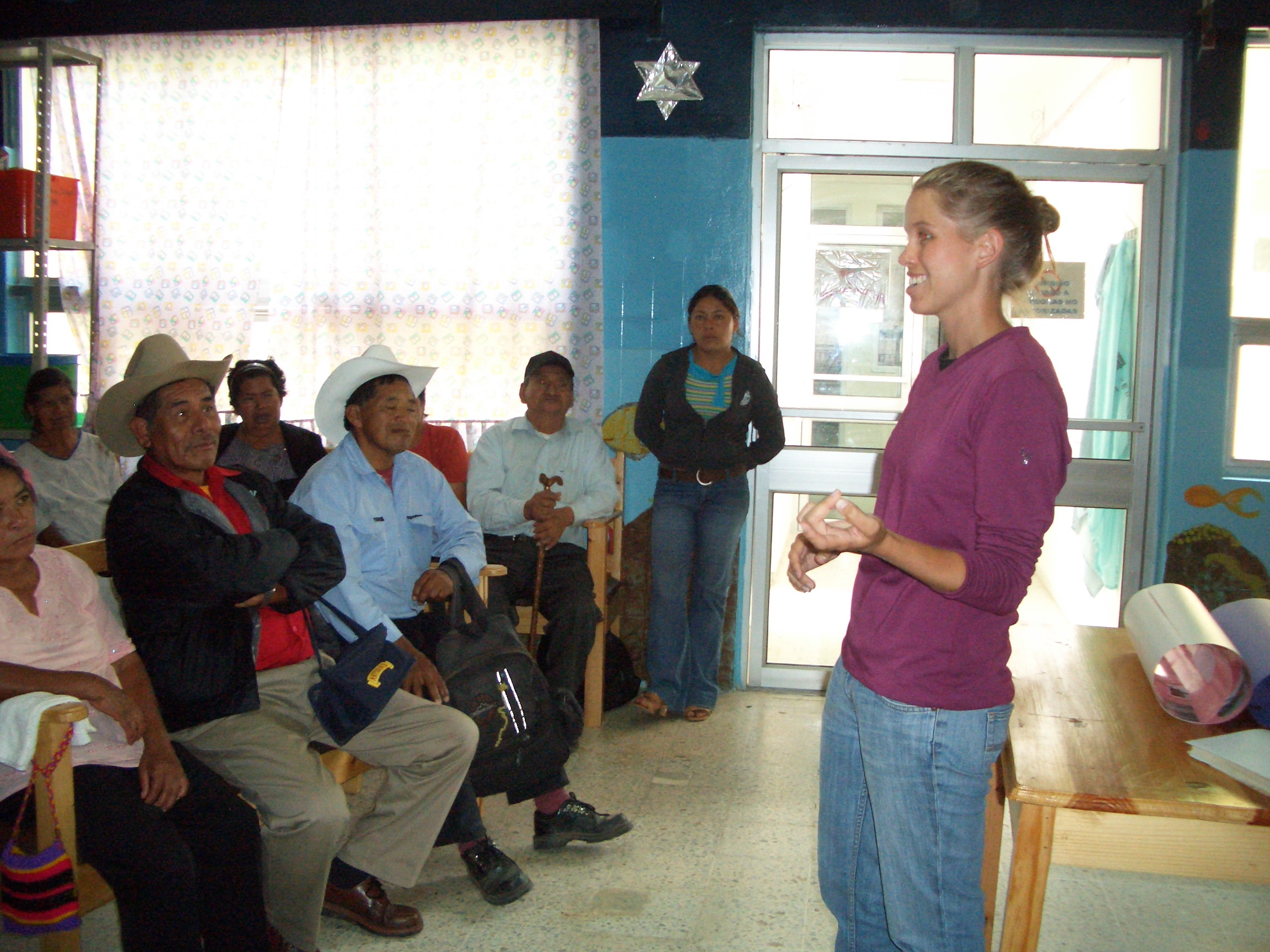
Along with my work at the Albergue, I have also started a Diabetics Club. I knew almost nothing about diabetes before I got here, but the lab director mentioned that there was a large need for educational charlas on diabetes at the hospital. So I did some web research, made some posters, and now we have a group of about 30 diabetics meeting each week at the hospital. I primarily discuss diet and exercise, and we are going to bring in guest speakers such as doctors, nutritionists, psychologists, microbiologists, etc. to speak to the club. One of the nurses at the hospital has taken an interest in the project and is volunteering her time to come to the meetings and help organize the club. She will make sure that it continues once I am gone. Only one of the 30 club members has her own glucometer. The other diabetics must come to the hospital to get their blood drawn and checked any where from once a month to once a day. There are some people working on getting some glucometers donated to the project, and I bet they could use some pictures, so here they are.

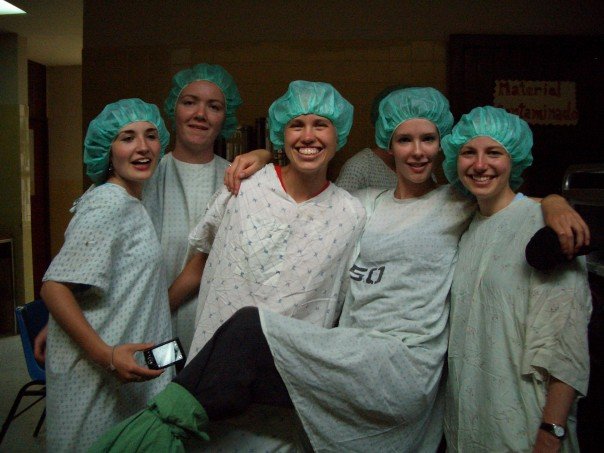
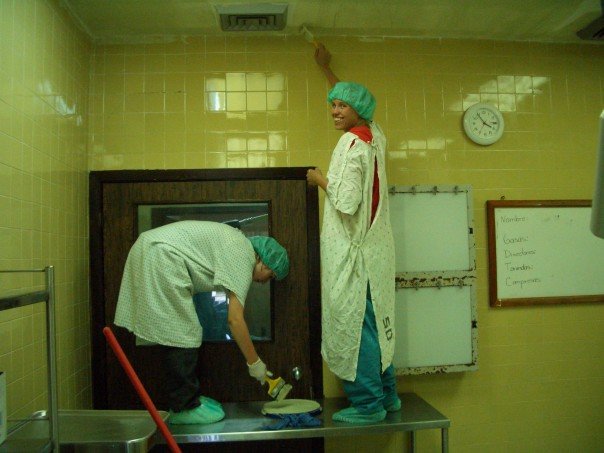
The roof on the hospital leaks, and therefore, there are water marks all over the ceilings and walls of the hospital. The hospital was considering trying to repair the roof, but they have decided that they will likely expand the hospital by building vertically, which will, eventually, fix the problem of the leaking roof. However, a temporary waterproof roof has been donated to the hospital to put over the operating rooms to prevent water-born bacteria from growing on the walls and ceilings in the operating area. So, the hospital needed someone to repaint the ceiling in the operating room and we have been working on it over the past couple of weeks. They still need some more work, but I think the pictures are worth it, just for our outfits.
The work at the Albergue continues to go well and I am working on finding some way for the project to continue once I am gone. Thank you all again for your donations to that project.
Archive for the ‘Travel’ Category
Club de Diabeticos y estamos pintando
Posted in Honduras, Public Health, Travel on April 19, 2007| 2 Comments »
Pura Vida
Posted in Honduras, Travel on April 16, 2007| 2 Comments »
It’s not the first 20 hours of a bus ride across Central America that really gets to you, its the last 5.
The week before last was Semana Santa in Central America. A week in which virtually no one has work and everyone celebrates a week long party in honor of Easter. In honor of the occasion, I decided to make a pilgrimage to Costa Rica to visit an old college friend. And, due to the buses being a tenth of the cost of a flight, I wanted to go by bus. Time is something I have, while money is harder to come by, plus I figured it would be a good way to see some more of the countries of Central America. Nick (the only other volunteer who thought that a 25 hour bus ride to Costa Rica sounded like a good idea) and I had spent the first evening of our adventure in Tegucigalpa (Teg, Tegus) , Honduras’s capital city. Monday we made our way to Managua (the capital of Nicaragua.) Crossing into Nicaragua went incredibly well and we were only charged 4US dollars more than it should have cost to enter the country, which wasn’t too bad I thought, considering that while standing at the border crossing I admired a nice plaque honoring the soldiers that had died in the war against America. Nicaragua is “una tierra de largos y volcanes.” And even from the bus it was striking. However, the part of the city of Managua that surrounded the bus station was not as charming. As soon as we existed the bus station we were surrounded by boys trying to lead us to the hotels that would give them a commission for bringing in the gringos. About 5 of them surrounded us, touching us, and our bags, and they even walked into the hotel that was recommended in the guidebook and said it was full (which it was not). Once we managed to check into the hotel that was not full, and put our bags in our clean and exceptionally well guarded room, it was dark. There were signs everywhere warning tourists that if they needed to go to an ATM, they had to take a taxi because it was too dangerous, even in daylight, to walk down the street with a pocketful of money. Nick and I had both changed about the equivalent of 10US dollars at the border and became determined to make this amount sufficient for not only our hotel but also dinner. We asked for a dinner recommendation (that wasn’t expensive) and were told of a great little place only a few blocks from the hotel, followed by the friendly advice, “If you are going to go out now, take only a little bit of money in your pockets, no credit cards, no cameras.” This much we had figured, and of course, we only had alittle bit of money. We picked out our food from behind glass counters, asking, “What’s that, what does it have in it?” We were recommended to try the cheesy mashed potatoes that had been fried (that’s right, a fried ball of mashed potatoes.) The potatoes alone made the stop in Managua worth it.

una tierra de largos y volcanes
We left the following morning at 5 for Costa Rica. The border crossing into Costa Rica wasn’t nearly as smooth. We had to wait in a 2 hour line in the drizzling rain, to get our passport stamped. Then we had to take our bags out from under the bus which they did my calling one person’s 10 digit baggage tag number over and over again until that person came to retrieve their bag. This often took a significant amount of time as not all of the passengers were back at the bus. We had to wait for several people to return from the passport line, the bathrooms, or lunch. By now it was pouring rain. One could read from my facial expression that I was wet and furious and one of the bus operators came to me and said “tranquila, we have to get the bags out so that they can check for guns and drugs from Columbia.” I wanted to ask why they didn’t open both sides of the cargo area to make it go faster and then to point out that Columbia was not on this side of the border crossing, but I was too mad to form a coherent sentence. Once we finally gathered our bags and took them over to be inspected, the baggage inspector just waived through all of the white backpackers (that’s right, because white backpackers never carry drugs). We clamored back onto the bus and I slumped in my seat and tried to calm down. The next couple of hours passed uneventfully, aside from the police officers boarding the bus at every checkpoint to check out passports (which at least made me feel like waiting in the 2 hour line had been worth it). Then, sometime as we were finally making our way to the interior of Costa Rica, I began to completely lose it. We were 20 hours into our bus journey and I wasn’t sure I could take another single second of sitting on a bus. I didn’t like the Jackie Chan movies they insisted showing on the bus, I was sick of listening to my Ipod and bored to death of sitting in silence and far to restless to try to sleep. I began grumbling to Nick and rocking back and forth in my seat. This was before we had even gotten to the capital, San José. When we finally arrived in the capital, we had an hour to get to an ATM, take a taxi across town to the other bus station to take the 3 and half hour bus from San José to where my friend Robin lives on the Pacific coast, and use the phone at an Internet cafe to call Robin in Manuel Antonio to tell her that we might actually make it, and that she should try to meet us in Quepos, the larger town nearby. (I was afraid making the phone call, because I was pretty sure that actually saying out loud that we might make it to her apartment in her small costal town that day would jinx the whole thing.) The phone call did almost jinx everything. Our bus for Quepos was leaving San José at 6:00pm, but the ticket office closed at 5pm. So in typical Central American fashion we were told that we had to buy tickets before getting on the bus, and then learned that it was impossible to buy tickets at that hour. Thankfully, a kind soul took mercy on us and allowed us to board and purchase our tickets on the bus. The bus broke down once on the way to Quepos. As the motor quieted and we pulled over, I was nearly in tears. Miraculusly, they managed to repair it and we pulled into Quepos only a half hour behind schedule. I don’t believe I had ever been so happy to see Robin. Robin and her boyfriend Dave met us at the bus station. We popped to a nearby restaurant for a relaxing meal and then headed to their apartment in Manuel Antonio, where I got to see another old friend, Robin’s Australian Shepard, Motley. The rest of the week passed wonderfully uneventfully.
The first day was spent going to the beach and then in the evening we returned to Quepos to stock up on liquor. The Costa Rican government, displaying the type of wisdom unique among governments and yet seemingly universally so, closed all liquor sales on the Thursday and Friday of the biggest party week of the year, presumably in order to encourage its population to contemplate the holiness of the week. (The only other time they have shut down liquor sales in Robin’s experience is for elections.) What of course actually happens is that locals and tourists alike flood the grocery stores and the liquor stores, boxes in hand and strip the entire town of alcohol on Wednesday night.
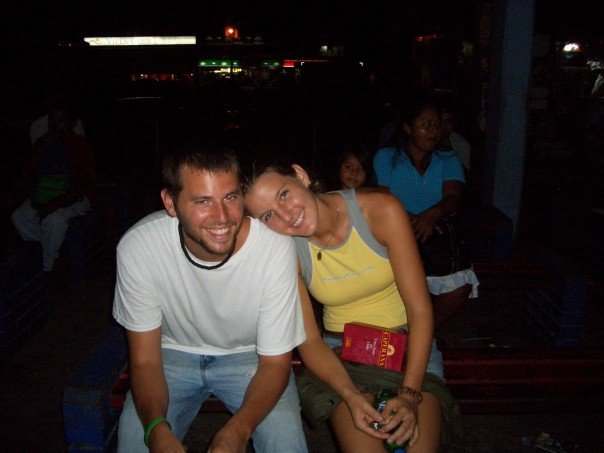
Robin and Dave
Thursday was spent going back to the beach, this time with our newly acquired beer and cooler, to watch the sunset.
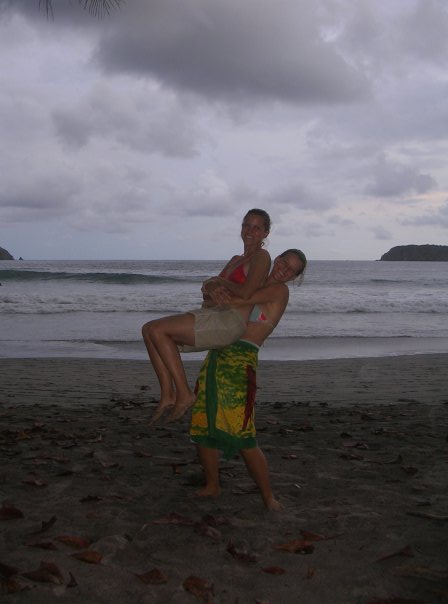
Robin and I on the beach
Friday Nick and I went to the national park for which the town of Manuel Antonio is named. We took a guided tour and saw white-faced Capuchin monkeys, Titi red-backed squirrel monkeys, (that makes three types of monkeys since I began my Central American adventure) three toed sloths, an anteater, lizards, and bats. We spent the afternoon lounging on the park’s beach, swimming in the calm waves, and guarding our peanut butter sandwiches and cheez-its from the Capuchins.

Parque Nacional Manuel Antonio
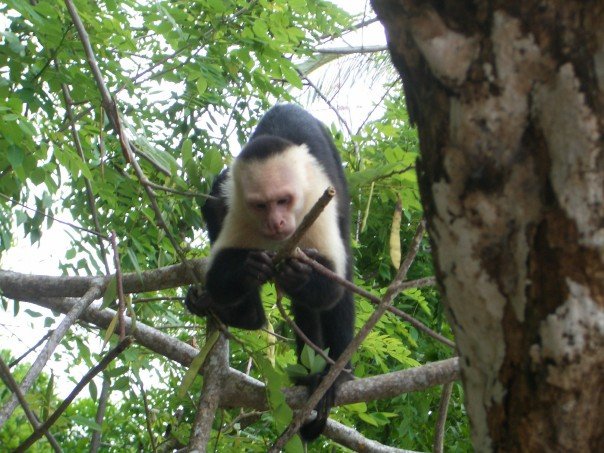
Capuchin
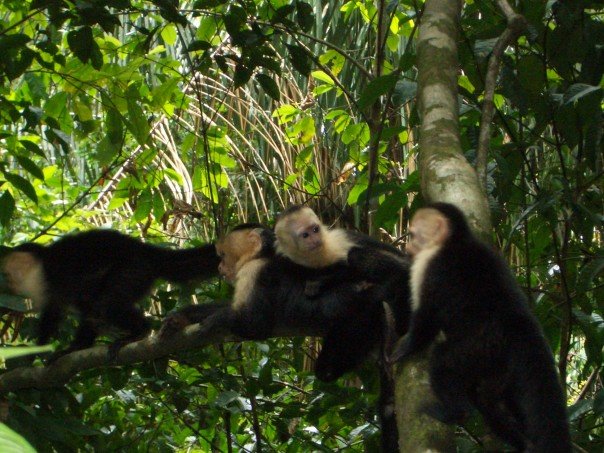
monkeys, monkeys, everywhere
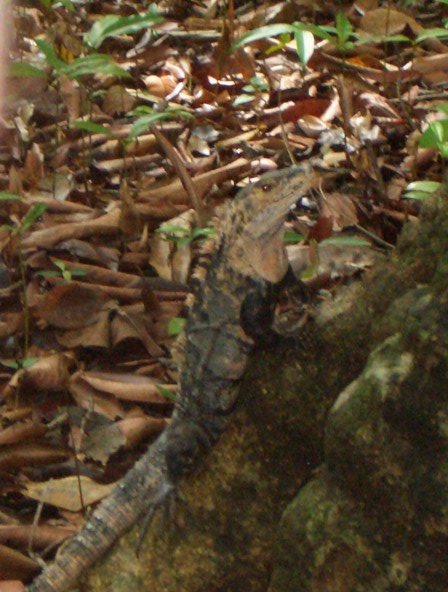
Lizard

Sloth
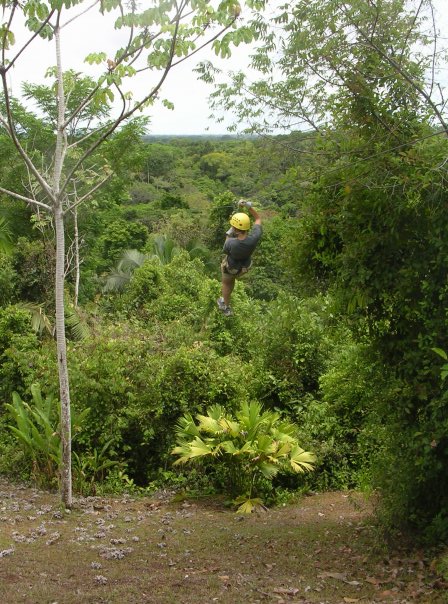
Saturday Nick and I took a Canopy zip-line tour, which was basically awesome. It included the added bonus of seeing poison-dart frogs.
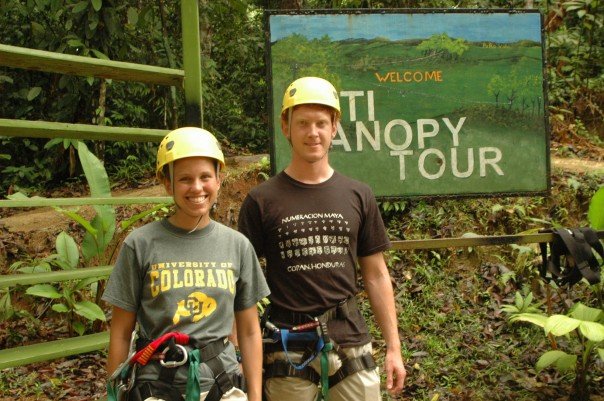
Canopy tour

Sunday was a fully scheduled Easter. We awoke at 11. Took Motley to the beach, struggled to find some freshwater source to wash off the ocean and sand (Manual Antonio was without water off and on all week due to the number of people that descended on the town during Semana Santa) and went out for dinner. The food was great, but not as impressive as the 1954 Model, Fairchild C-123 cargo plane that the restaurant was built around. On October 6, 1986 the sister plane of the C-123 at the restaurant was shot down over Nicaragua by Sandinistas, and an American CIA operative who had parachuted out was captured. The US had been funding the counter-revolutionary Contras in Nicaragua from profits reaped by inflated arms sales to Iran, and the CIA helped the Contras to buy, with the money they were given, several planes, including the plane that was shot down, and its sister that now sat across from our dinner table. On October 7th the US administration, State Department, CIA, and Department of Defense all denied that the plane that was shot down was in any way connected to the US government. On October 8th, President Reagan strongly suggested that he had actually approved the efforts by the Americans on board the shot-down cargo plane. And gradually, the Iran-Contra Affair was exposed. Due to the cargo plane being shot down over Nicaragua, it’s sister plane that was now at the restaurant was abandoned in San Jose. The plane was really neat. And now it also serves as a bar and nightclub.
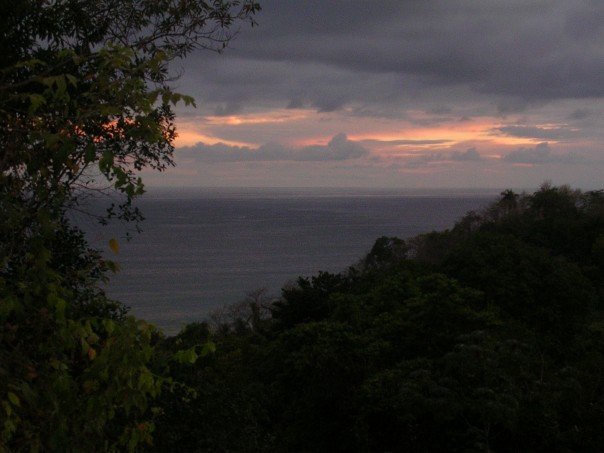
Sunset in Manuel Antonio

The plane
We began our trip back to Honduras on Monday, spending our first night at a terrific hostel in San José where we met some awesome people. One man had quit is job almost a year ago and had visited 23 countries since. Another was about to leave for the Peace Corps because he had gotten too comfortable with his life in New York City and the 300 dollar bottles of vodka that came with it.
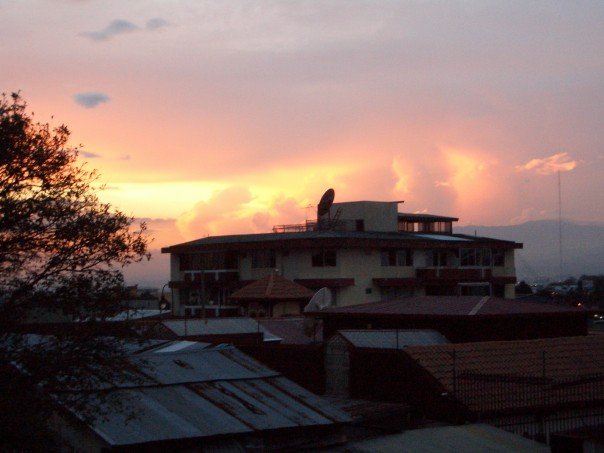
Sunset in San José
The border crossing back out of Costa Rica was shockingly more difficult than getting in. This time it involved waiting in a two and half hour line in the relentless sun, without shade or cover. Once we had gotten through the two and half hour line we got to wait in another line (under cover) that eventually meant we got to wait in another line inside to get our passports stamped giving us permission to leave the country.
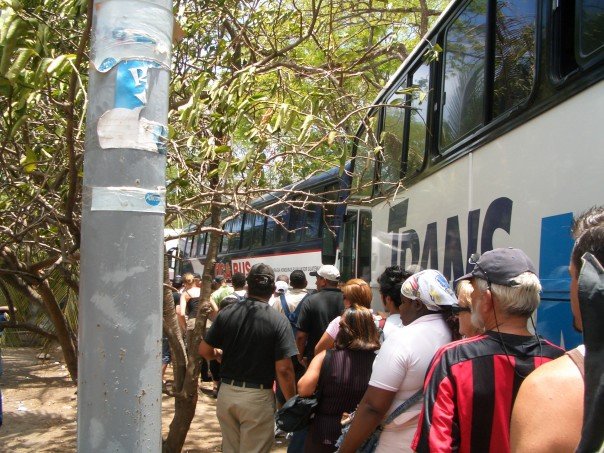
The line to get out of Costa Rica
Nicaragua from the bus was again stunning, and once again we spent a night in Managua. This time we had changed more money at the border so that we could have two orders of fried mashed potatoes.
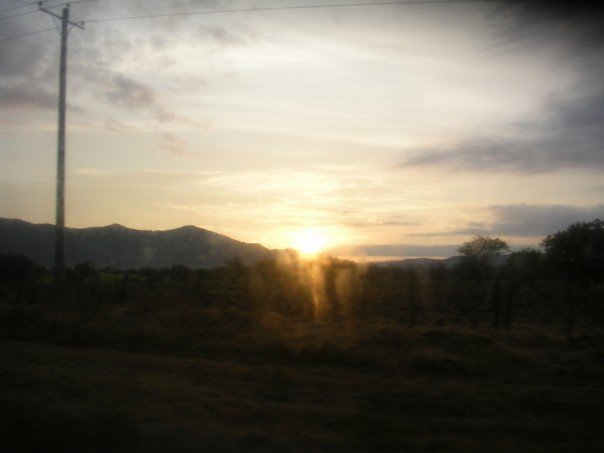
Sunrise in Nicaragua
We arrived in La Esperanza Wednesday. Tired, dirty, and pretty ripe smelling, but happy.
Why don’t you have any children?
Posted in Honduras, Public Health, Travel on March 31, 2007| 1 Comment »
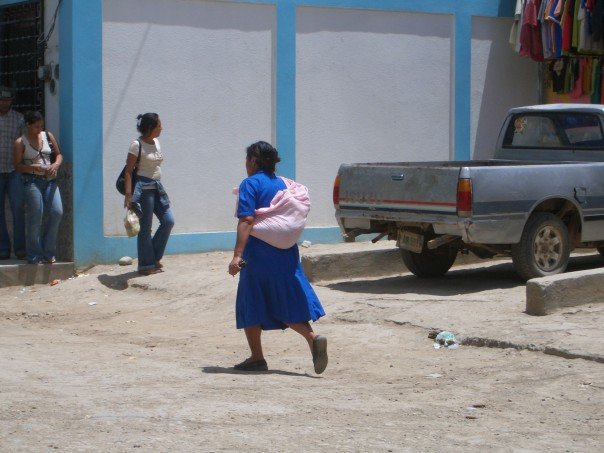
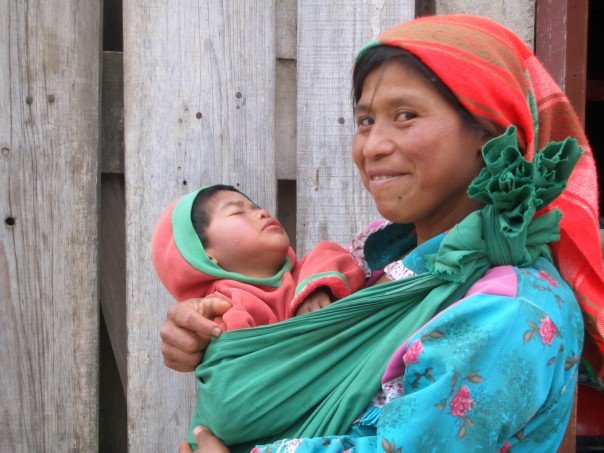
Much of the work that I do in Honduras involves educating women about possible birth control options. I tend to begin my “birth control spiel” by asking women how many children they have, followed by asking them how many they want in total. It is often the first time that these women have ever been asked to think about how many children they want. It’s the first time that someone has posed the subject as a choice. The women get confused and don’t know how to answer so I usually volunteer something like, “For example, I want three children. But the mother of the family I am living with here thinks that is too many. Many women only want to have one or two children.” The women usually laugh at this. They ask me how many children I have now. I respond that I do not yet have even one child. They ask me how old I am, and when I answer 23, they are shocked and confused. “Why?” they ask. I tell them that my boyfriend and I use birth control because we are not ready for children yet. I tell them that I wanted time to travel here to work with them and that I still want to go to another two years of school.
The other day, when I explained this to a group of women in the pourperio (the area in the hospital where women recover after giving birth) one of the women sat up and said, “You could still have a child, you could just do what everyone here does and strap him to your back and go about your traveling and studying.” Everyone got a huge laugh out of this. I explained that I understood that was how women did it here, and that I admired their strength, but that for me, it would just be too difficult. Children can be a lot of work, and women should decide how many they want to have, and when they want to have them.


A doctor, a female patient, about 18 years old, and a translator are sitting around a table in a make-shift rural clinic. The doctor is holding an intake sheet that indicates that the patient suffers from headaches.
Dr.: “Can you please ask her about her headaches?”
translator: “Tiene dolor de su cabeza?”
patient: “Sí.”
translator: “She has headaches.”
Dr.: “Can you ask her where it hurts.”
translator: “Puede enseñarme donde está el dolor?”
patient: “It starts here in the front and moves all the way back and into the back of my neck.” She uses hand motions to demonstrate where she has the pain.
translator: Says nothing, assuming that the hand motions were clear enough and momentarily forgetting that the doctor doesn’t speak Spanish. The translator turns to the doctor awaiting the next question.
Dr.: “What did she say?”
translator: “Oh right, sorry. She says that she has pain that starts here in the front, and moves to the back of her head and down to her neck.” The translator mimics the patient’s earlier hand motions.
Dr.: “Can you please ask her if she has sensitivity to light?
translator: “Cuando usted tiene el dolor de cabeza, tenga usted problemas con la luz?”
patient: “No”
translator: Forgetting that the doctor does understand “no” the translator turns to the doctor and repeats, “no”
Dr.: “Can you ask her if she has sensitivity to sound?”
translator: thinking — oh man, what is the word for sound? The words for to listen, to hear, ear, fill the translator’s mind, but no sound….the translator asks, “Lleva, usted, cosas pesadas en su cabeza?”
patient: “Sí”
translator: “Cuales cosas?”
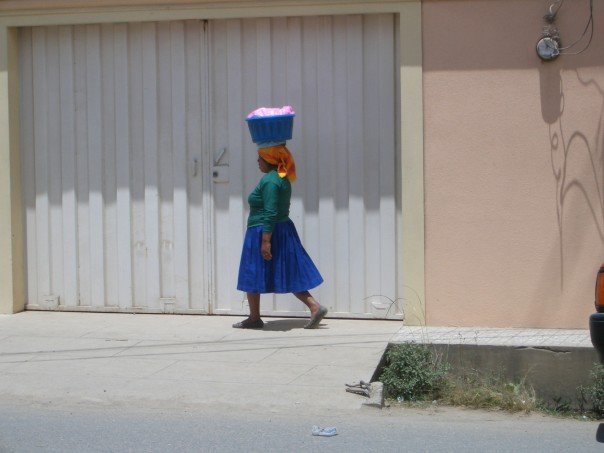
patient “tela, leña, agua, y comida.”
translator, do the doctor: “She carries cloth, wood, water, and food on her head.”
Dr. “Oh.” The doctor kindly does not insist that the translator repeat the question about the noise. And instead prescribes some ibuprofen and that the woman make her husband carry some of the heavy things.


Tela — spiders, lizards and howler monkeys, Oh My!
Posted in Honduras, Travel on March 28, 2007| 2 Comments »
Last weekend we headed to Tela, a beach city on the north coast. The city boasts access to white sand Caribbean beaches, the world’s second largest botanical gardens, one of the country’s best national parks, and several Garifuna villages. Garifuna isa culture that resulted from a collision of native Caribbean people and shipwrecked and escaped African slaves. We hit the gardens, and the national park, and still had time for relaxing in hammocks on the beach, dancing to the wee hours of the morning, and eating pizza (we have all had about as much of the plato tipico as we can handle.)
The Lancitilla Botanical Gardens were planted in 1925 by the United Fruit Company. Supposedly, both to determine which fruits would grow best in Honduras, and also as a conservation effort. It is an impressive project. For whatever reason, the company imported several poisonous fruit trees. All of the guidebooks had warnings about the poisonous fruits, and not to touch anything marked with a skull and crossbones. My host family also warned me not to eat any of the fruit (not actually much of a concern as it is not fruit season). And as we walked into the park, the woman at the information booth had one important piece of advice — don’t touch the trees marked with a poison symbol. All of those warnings, combined with the skull and crossbones on the marker in front of the trees, encouraged us to keep our distance. Upon my return, I learned that everyone is so concerned about the poisonous fruit because, apparently, one of the park employees ate a piece of it a few years ago and died. The fruit is not messing around.
Our second day we took a guided tour to the Jennette Kawas National Park, Punta Sol. The park is widely held as the best in Honduras. Jennette Kawas was a Canadian working to conserve the wilderness areas around Tela when she was murdered in her Tela Home in the mid 1990s. Rumor has it that she was killed by high ranking military officials who wanted to develop the land for tourism. Her killers have never been caught. Shortly after her murder the area was officially named a national park and given her namesake. We hiked through the jungle, learning about the poisonous spiders that lined the trail, “When one of those bites you, you start to feel faint, feverish, and like you are going to throw up. Then your heart stops. But it doesn’t stop that fast, we have time to emergency you to Tegucicalpa.” explained our guide. I kept my distance from the spiders. We also saw poisonous lizards with big red things that they puff out around their necks when they are mad or scared. All I could think of was the scene with the spitting lizard in Jurassic Park. The lizards can jump from the trees to attack when they were scared or defensive. I made wide arcs around their trees. The highlight of the trip for me was seeing the wild howler monkeys. We saw about 10, one of them a mother carrying her infant. Our guide howled with them a bit, but they weren’t very conversational. We stopped for a rest on punto escondido, one of Captain Morgans famous hang-outs. Supposedly his treasure is still buried on the shores there, though we didn’t have time to start looking. We spent the rest of the afternoon lounging on beaches and in hammocks and swimming in the Caribbean Sea. We ate full fried fish cooked up in the small village in the park (pop. 16).The villagers are allowed to live in the park because they were there before it was converted to a national park. There are some children in the village, but they do not attend school, because the nearest one is a 3 and half hour walk through the jungle.
Overall, it was an amazing (long) weekend and one that prompts my boyfriend to point out that I am on vacation. I am so glad that I have had the opportunity to spend some time here volunteering and getting to travel around the country. I will be working the rest of this week in La Esperanza, and bringing in the food to the women in the Albergue tomorrow. The women remain incredibly grateful for the food and the education and I just want to thank all of you again for your donations. Next week is Semana Santa (a week long party in celebration of Easter). Virtually no one has to work next week, and I am planning a trip to visit a friend in Costa Rica.
Buenas tardes y adios,
Erin
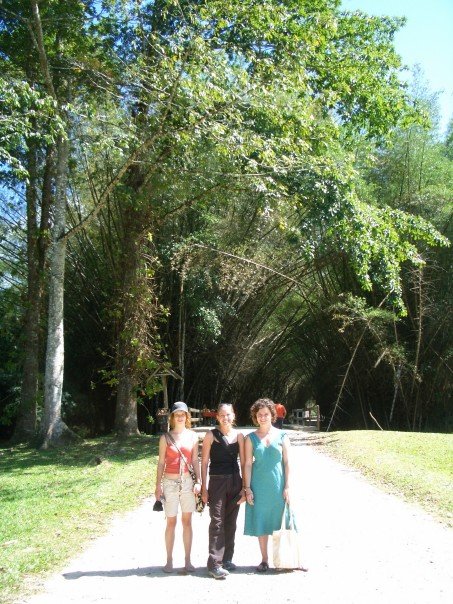
The Lancetilla Botanical Gardens

Don’t eat!
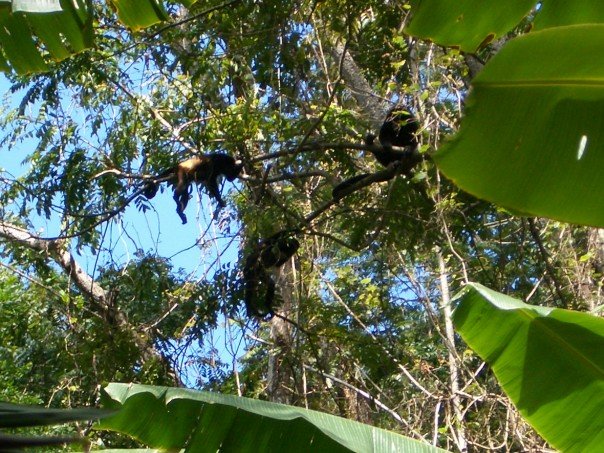
Howler Monkeys!
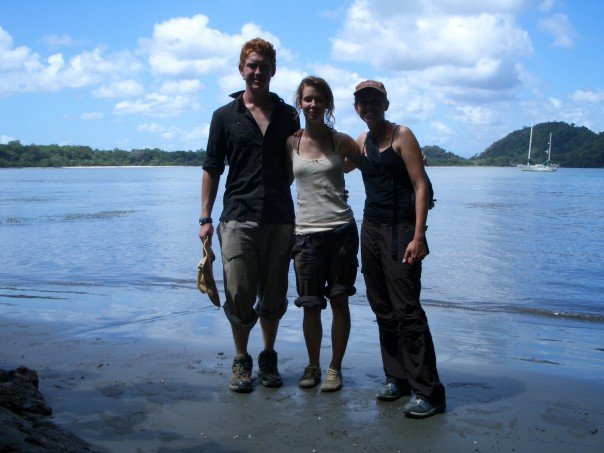
Punto Escondido

Village, population 16
Los animales
Posted in Honduras, Travel on March 16, 2007| 1 Comment »
Hola amigos,
Not much new to report in La Esperanza this week. My work continues to go well at the hospital and tomorrow I will also begin giving “charlas” at the Centro de Salud. I should let those of you doctor-types out there, that I have managed to aquire some pictures of the bot-fly extraction, and they are posted below in the post about the medical brigade
It is springtime in Honduras and there are babies (people and animals) all over the place. The albergue has exploded with women. While there were usually 6-10 women at the Albergue when I first arrived, there were 20 last week and 25 this week. It is great because it means that my education is reaching a large number of women, but it also means that I have been buying more food than expected the last couple of weeks and could use even more donations. If you are interested in donating, please see Make a Donation to help feed pregnant women in La Esperanza, Honduras
So with not much new here, I figure I would give you all an update about my usual daily interaction with animals. When I told my host mom that there was not a rooster within 50 miles of where I lived, she was in absolute disbelief. But come to think of it, I can’t imagine waking up at 5:45 without the cry of the roosters either.
Everyday on my way to the center of town, I pass Lola. I don’t think that she likes me very much. She often turns her back on me as I come around the corner. I approach saying, over and over again, “hola, hola, hola, hola, Lalo, hola, hola, hola. ” I have no idea why she doesn’t like me. Her owners have assured me that “ella puede dicer de todo,” but she never has much to say to me. I have managed to get nothing more than a grumbled “hola” out of her. But I have recently been seriously working on our relationship. I figure there will be few times in my life when I wil pass a parrot everday on my way to town and I ought to work to at least have a speaking relationship with her. I think we are making progress, she no longer always turns her back on me, and I hope that with some work, I will manage to get a cheerful “adios” as I pass.

Lalo
One of our family dogs has had puppies. Bola, short for Bola de Nieve (snow ball) gave birth to 6 puppies under our porch about a month ago. One died shortly after birth, but the others are doing great and beginning to wonder all over the yard on their own. They are also beginning to steal the food from both their mom and dad. The puppies’ dad also lives with us. I asked how we knew he was the dad, and the housekeeper just looked at me questioningly. How do I think she knows? And then I remembered what my mom said about growing up in the country, and how sex education was not as necessary a part of the curriculum, because everyone gets a pretty good idea of how things work.

puppy family

We also have a pregnant cat at our homestay, and will have kittens any day now. The cat curled up on my lap as I was writing in my journal and I could feel the kittens bouncing all over the place. Gato (I am not sure if the cat has any other name) also found another animal in our house — a full grown scorpion. The dad saw the cat playing with the scopion and broke the scorpion’s tail off before allowing the cat to finish killing it. Awesome. I love scopions. (I hope the sarcasm isn’t too difficult to get across in a blog post.) I have been religiously checking my sheets every night before I get into bed, and trying to remember to check my shoes. My host dad said that scorpions are pretty rare in the house, but they can be very dangerous in boots. He also said that it was one of the reasons he liked having the cat around. That was when I started letting the cat in my room, and under and on my bed.
The other day the dogs were barking like crazy as I approached the house after meeting up with the other volunteers at our usual bar in the city. It was around 9pm and I couldn’t figure out why the dogs were barking so much. It is pretty dark out by our house, and even with my head lamp it took me a minute to realize that there was a horse standing horizontally blocking the gate in front of my house. I stared at the horse. There was no other way into the house. I knew enough not to try to walk around his back legs, so I stared at him and finally tried making a clicking sound that I hoped indicated I wanted him to move. My host dad came out wondering what the dogs were barking at. “What’s going on?” “Hay un caballo.” And as soon as the words left my lips, the horse moved along and cleared a path through the gate.
Last Friday, there wasn’t much work to be done at the hospital so I went and worked on building houses with the construction volunteers. Great fun. We did a terrfically difficult day of work. I got to hack at the sides of the mud pit with a pickaxe, jump on the mud once the water was added to the clay, add the pineneedles and jump some more, and then lift out a quantitiy of mud sufficient for 50 adobes (which, is a lot). My muscles are just beginning to feel like they are getting back to normal.

digging in the pit

stomping the mud

The amount of mud we made and moved in a day. The kid is 14 years old, though admitidly better at making and moving mud than Megan and I put together.

building site with kids
Hi, I’m Erin
search this site
Pages
- Resume
- Writing
- Regulation of Associated Health Plans
- Tackling Obesity through Agricultural Policy
- Facilitating Access to Reproductive Health Care for Urban Teens
- Letter to the Editor re: DIA Redesign Plans
- Infant Health in Wigan, England during the First World War
- An op-ed — with the swipe of a pen, 25 percent of American children eat more vegetables
-

Yes, I tweet, sort of
Tweets by erinashmiller-

Top Posts
Tags
ASPE Dan engagement family friends Grad School health policy Honduras Italy life new years New York City preparedness Public Health Recipes South America study abroad techy stuff Thoughts tourist sites Travel Washington DCCategories
- Health Policy (5)
- Honduras (33)
- Italy (15)
- New York City (25)
- Public Health (32)
- Recipes (2)
- Reviews (1)
- Seattle (4)
- Thoughts (72)
- Travel (62)
- Washington DC (15)
My projects
Volunteering Links
Other Links
 You can get to
 Erin Miller