Congratulations are in order for Denver WIC. I just received word that my wonderful ex-office mates saw over 10,000 clients in February! That is 10,000 women, infants, and children who are healthier because of you guys. That is pretty incredible stuff, keep up the good work.
Archive for the ‘Public Health’ Category
Congratulations Denver WIC!
Posted in Public Health, Thoughts on March 29, 2007|
“Que hora es?” “Ya. Ya, o mas tarde”
Posted in Honduras, Public Health, Travel on March 10, 2007| 12 Comments »
I have been busy since I last had a chance to update everyone. I have been partying hard and working harder. I have traveled both to Cop’n and to Utila, one of the bay islands. I have also made great progess on my volunteer work here. So here goes the update:
COP’N– “How long does it take to get there from here?” “Oh, only about as long as it takes to get from there to here.”
Riding on public transportation with live chickens — check.
Cop’n is located very close to La Esperanza. However, it is virtually impossible to get there from here. There are two options. Take an old American school bus along the unpaved, barely maintained, and extrememly narrow road to Gracias, and from there a paved road to Cop’n. This route requires about 5 hours on a bumby old American school bus, in 80 degree heat with dust flying at your face, and then another 3 hours from Gracias to Cop’n. Or, you can take the paved roads. This means that you can take a slightly nicer bus from La Esperanza to San Pedro, which takes about 3 and a half hours, and then take another series of busses to Cop’n which takes another 3 and half hours. Nobody who does the Gracias route once does it again. We had some people in our group who had gone via Gracias before, so we all went via San Padro. We arrived in San Pedro without many problems. But San Pedro is big, and HOT. It’s inland, low elevation, humid and hot. And it has several bus stations. So after getting dropped off at the big bus station we had to take an American school bus across town and then walk in 90 degree heat and 90 percent humidity, with our packs 45 minutes to find a bus station that had buses going to Cop’n. We finally found the station and boarded an old American school bus that would take us part of the way there. After 2 more transfers onto different sets of old American school buses, we were finally on our way to our destination. We arrived near sunset. But our last bus did have two women on it carrying live chickens (held upside down so that they were dizzy and quiet). It was the most fortunate thing about the whole adventure — I got to check one of my must-dos in Honduras off my list.
Cop’n is a beatiful and peaceful town with cobblestone streets that provided a nice respite from the dust. The ruins themselves were fabulous. The major dynasty began when a nearby king decided to expand his kingdom and arrived in the Mayan village on the first day of a Mayan significant 400 year period. (Think of someone from mars showing up on the first day of a new millenium.) He declared himself divine leader and started a dynasty. Cop’n had 16 rulers over the next 400 year period. The 16th ruler was the first to have no blood relation to the first dynastic ruler. Another 400 year period was coming to an end. The last king held several traditional games in the ball court. The winners of each game were sacrificed to the sun god (whoops, can believe I missed that ball). The last ruler then completed the longest hieroglyphic text in the western hemisphere depicting the 16 rulers of the civilization. Then as the 400 year period ended, he decided that the kingdom should pack up and head out; and in order to keep everything cool with the Gods, they did.
The last night in town the power went out around 5pm just as we were coming back from some nearby hot springs. Everyone said that the power always came back on in 5 minutes, an hour at the most. Right, I thought. And sure enough the power was out for at least the next 13 hours. Which meant that we did not get our warm showers our second evening. This was a significant bummer as the warm showers are one of the largest motivations behind traveling. Our hotel actually lost all water (electirc water pump of course) but they did set a bucket of water outside our door to use for bucket showers. We packed to go home in the dark.
The voyage home went much the way as the voyage out. But once we were finallya reasonable distance out of San Pedro, the bus broke down. The driver got out and banged at the moter with a wrench to no avail. But as a group we had tremendously improved our ability to travel Honduras style. We just waitied, sun bathing on the side of the road for someone to come by. And whether it was by purpose or accident, another bus came by to take us to our destination.

Cop’n ruins

The bus
UTILA– dancing on a dock over the Carribean under a full moon — check.
The trip to the bay islands was much smoother, despite is greater distance. Once on the islands we sunbathed, snorkled, ate and danced. The beaches are Carribean white sand and a nice contrast to the volcanic stone beaches of Italy. I spent lots of time just reading on the beach. Peaceful, beautiful, and wonderful, and my legs still itch from the sandfly bites.
WORKING IN LA ESPERANZA — Washing my whole body and hair with only one bucket of mostly clean water — check.
It has not all been a Carribean vacation. I have actually been getting lots of work done as well. Giving the food out at the Albergue has been going very well. The woman are very receptive to my information about nutrition and family planning. Thank you to all of you who have already made donations! I have enough for at least the next 6 to 8 weeks or so. If anyone is still looking for seomthing to donate to, I can definitely use all the money I get. Please see Make a Donation to help feed pregnant women in La Esperanza, Honduras
We also finished painting the center for children of single mothers. And with some free time on our hands, I organized a group of us to get a fresh coat of paint down on the Albergue as well. It looks much better. The Albergue is well, sort of gross. The kind of place where when someone first offers you a chair you respond– “Oh, I’m alright, I’ll stand.” The women clean the floors daily, but there is only so much you can do when the walls are falling apart. The Albergue is made of adobe that was mixed with bad dirt, so the walls are falling away and there are large holes throughout the place. Rats, mice and worms live in the walls. The sink, which I doubt ever worked, is falling off the wall. It needs more work than we knew how to do, but it looks much better in sky blue. When I returned to my homestay from a full afternoon of painting I looked like something the cat dragged in — covered in paint and cobwebs. The water was not working. Not even the pump outside. I walk into the kitchen and said to my host mom, “No hay agua.” “There’s no water.” “No, no hay agua.” “But I need to bathe.” She looks up at me, “Ooomph, you do need to bathe.” The water had been out all day, there was barely enough to cook with. But she filled a bucket with our old laundry water and I took a bucket shower, full on. Washed my hair and everything. It was kind of fun once I got the hang of it. Definitely a skill I am developing. I hope to eventually be as good as the natives and bea ble to bathe my entire body and wash my hair in only a half bucket of water.

Albergue before
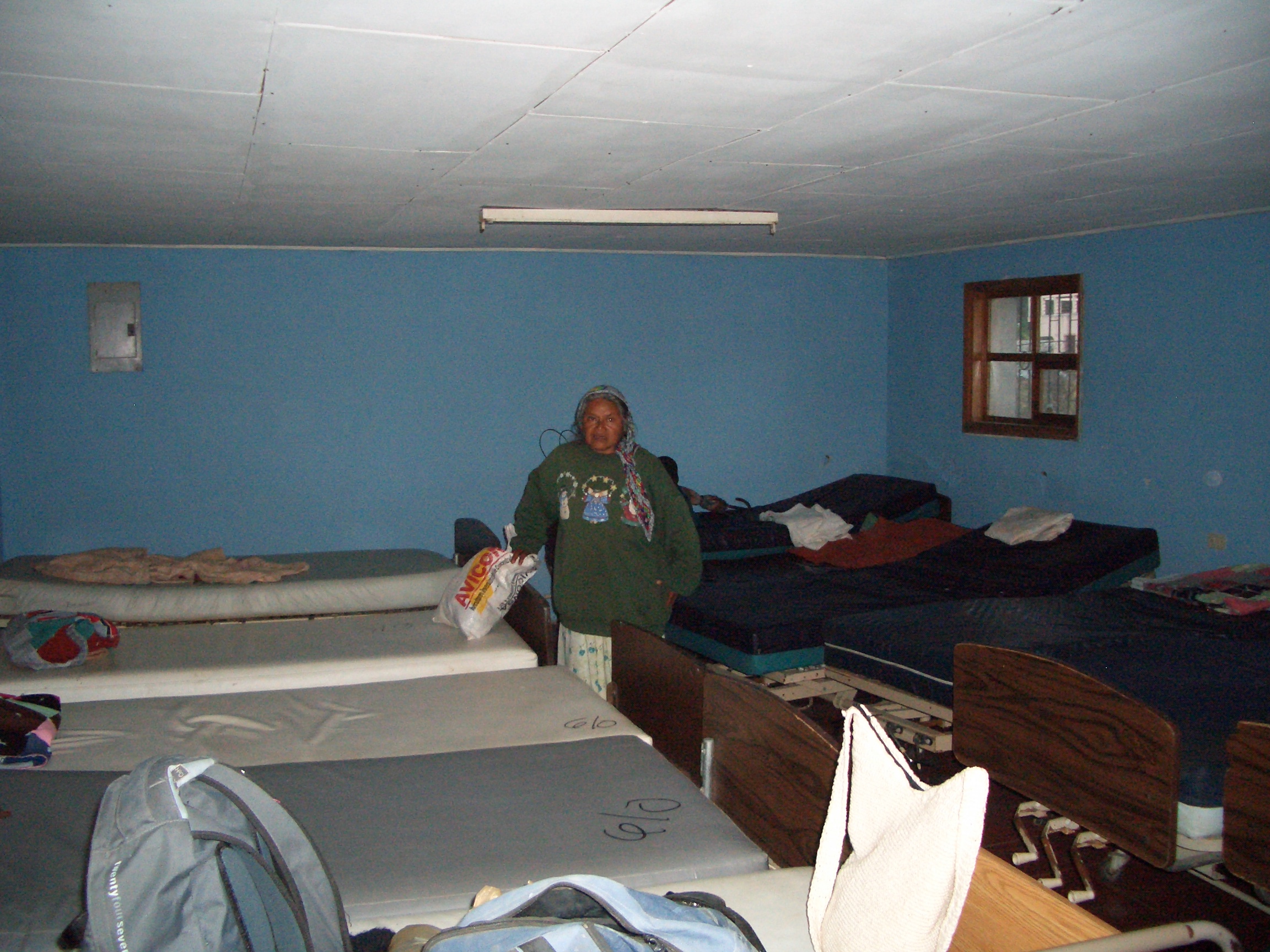
Albergue after
WORKING WITH LA BRIGADA DE LOS MEDICOS — pulling two 3/4 inch botfly larva out of a girl’s scalp — check.
I spent the last week traveling all around the department of Intibuca, Honduras, setting up makeshift medical clinics in rural communities with a brigade of doctors from Ohio. It was an amazing and completely exhausting week. I spent most of my time translating at one or a couple of the clinic stations. We saw all sorts of interesting stuff that had the medical students jumping out of their pants. The most exciting case was definitely the botfly larva. A girl cme in with a serious legion on her head. We had one surgeon on the team providing basic surgeries. He took a look at it and cleaned it up. The girls screamed and he said he had finished. The translater that was working with him said, “no, the mom says that there are worms in there and she can see them.” This prompted a deeper examination and a minor surgery to extract the larva. Two 3/4 inch larva living inside a girls head. Gross. I do not want to be a doctor. But I will work on uploading pictures from the brigade once I get them for all you doctor types. I found myself actually quite knowledgeable about the botfly due to an article I read just before I left. Two days before I left the States my mom handed me a medical journal with an article about a child having a larva removed from just above his eye. My mom had me read the article only to increase my comfort level at coming to Honduras. And what do you know, the information actually came in handy. We also splinted up a boys arm, saw several cases of chicken pox which were only exciting due to their new-found rarity in the states, and saw several cases of Filariasis (when some larva grows into an adult worm inside someone and then dies in their lymph nodes creating a significant swelling, particularly of the lower extremities.) We saw tons of cases of scabies and lice, and now that I am thinking about it, my head did sort of itch this morning…The doctors treated about 300 people a day. People would walk two hours or more to come to the clinic. One night we worked well into dark using wahtever headlamps, flashlights and candles we could find. It was a terrific experience from a public health point of view. Friday night we had a presentation of thanks at the mayors office followed by a terrific dinner and dancing.
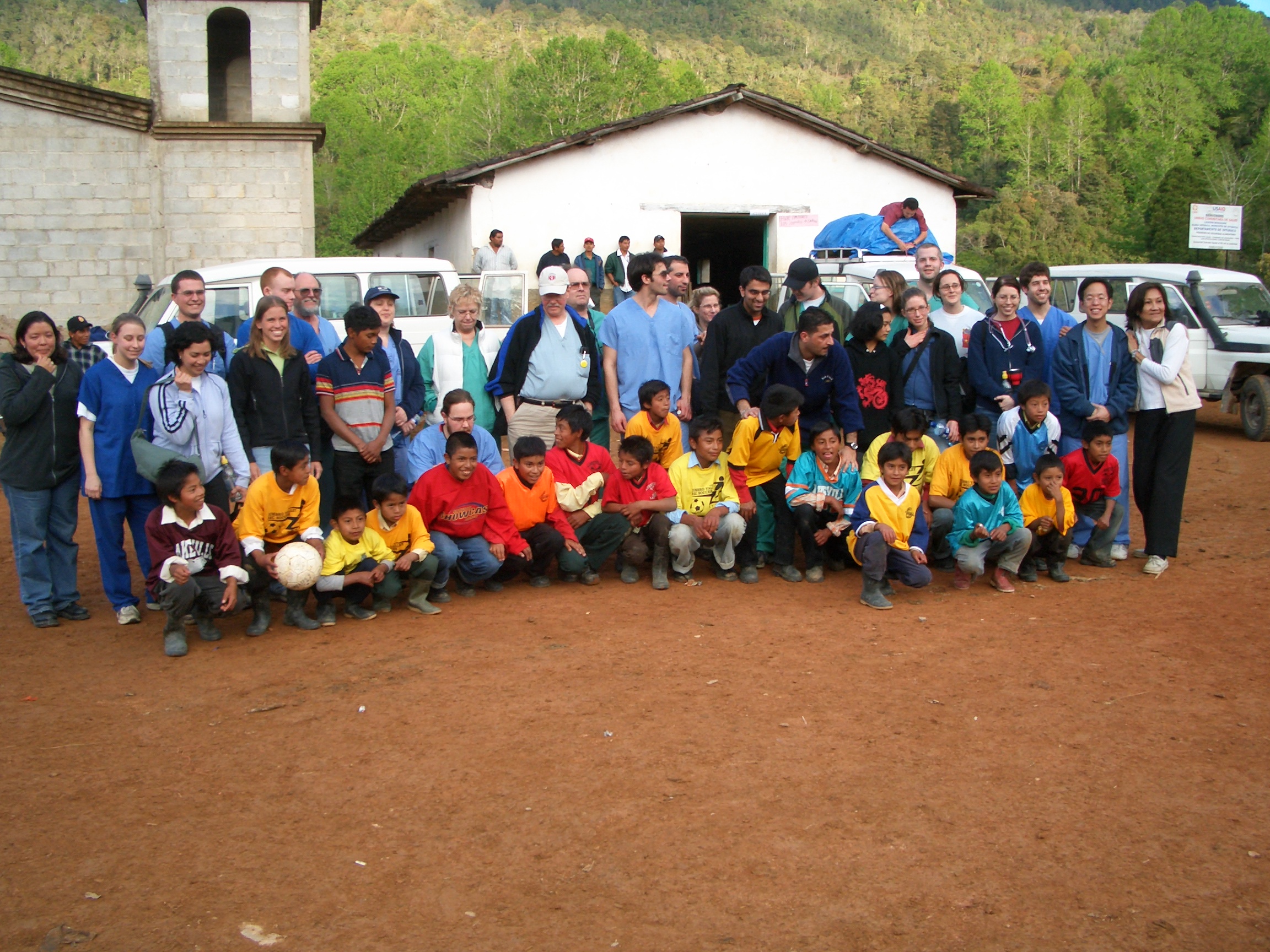
La brigada de los medicos

extracting the botflies

the botflies
Sorry for such a long update. I’ll try to do better about updating more frequently. I wish you all the best of luck against the botflies.
Make a Donation to help pregnant women in Honduras
Posted in Honduras, Public Health on February 26, 2007| 8 Comments »
I need donations to buy food for prepartum women living at the albergue (an the overnight house by the hospital) while they wait to go into labor. The pregnant women at the Albergue have been fairly receptive to my “charlas” on nutrition during pregnancy, infant and child nutrition, breastfeeding, and family planning methods. However, the woman who stay at the albergue are in extreme poverty and they often comment to me that they do not have enough to eat and that they are hungry. The woman are interested to know what they should be eating during pregnancy, but have difficulty acquiring the foods that I discuss in my talk. For about 500 lempiras (a bit less than 30 American dollars) I can buy the women a food or two from each of the four groups that I discuss as being especially important during pregnancy during my weekly “‘Que debe comer durante el embarazo?” charla. During my talk I mention the importance of calcium, protein, iron, and folic acid. I will be able to buy the women enough cheese, powdered milk, eggs, beans (and rice), avocados, and peanuts to last about a week. I would like to set up what will essentially be a little miniature WIC clinic here in La Esperanza. I can tell the woman what they should be eating, and then give them a food from each group. The women can prepare the foods themselves over the out-door stove and will receive practice in consuming foods important to a healthy pregnancy. While these woman are in the later stages of pregnancy, the food and nutrition information will still be extremely valuable. Most woman here take prenatal vitamins only during the first 6 months of their pregnancy. Those are the most important months to take the vitamins and it allows the women (and government programs that try to help support them) to save money. So the woman in the albergue are generally not taking prenatal vitamins, so receiving extra nutrients in their diets is especially important. Further, if I am able to impress upon them the importance of receiving these nutritents during their pregnancy, they may be more likely to consume these foods during the earlier stages of their next pregnancy. They will also be able to share this information with other women back in their villages. Another important advantage of this program is that providing food for the women at the albergue will encourage other women to come to stay at the albergue before giving birth, and this will help to lower extra-hospital maternal mortality.

The Albergue kitchen.


The first week of food donations
So, I am asking for your donations. Just $30 dollars will provide enough food for me to bring in each week. If you are interested in making a donation, please click on the button below.

Farewell to WIC
Posted in Public Health, Thoughts on January 26, 2007|
Working in WIC has been a much more valuable experience than I could have ever imagined or asked for. I will miss working with our clients and getting to hear amazing stories from interesting people who are working to improve the health and nutrition of their children. Working as a WIC counselor provides innumerable opportunities to help others. I will also miss my supportive and smart co-workers who bring their cultures, traditions, language and cooking to the office. Thank you Denver WIC, it has been an amazing experience; and I LOVE my balloons.
Missing the forest for the trees
Posted in Public Health, Thoughts on January 20, 2007|
I have really enjoyed my time spent working at WIC. One of the greatest advantages of the job has been an opportunity to improve my Spanish proficiency through working with our very patient, understanding, and helpful Spanish-speaking clients. I have recently come to the conclusion that the most difficult aspect of the job is counseling — determining what information and which words will be most valuable to a person I am trying to help. Learning a new language and learning about nutrition, and teaching, are all things that I have had experience with in the past. But counseling has been a new challenge. I have recently become impressed and alarmed with my ability to miss the forest for the trees. I often overlook the largest problem facing a client and therefore prohibit any real communication. The other day a beautiful, blue-eyed, fifteen-year-old pregnant girl stared at me from across my desk. She looked at me as if the sky was about to fall down on her. Her beautiful eyes looked at me like a deer in headlights. And I carelessly went on to tell her about the importance of getting enough calcium and the benefits of breastfeeding, even though I sensed that she couldn’t hear me. She needed someone to touch her shoulder and tell her that everything was going to work out, the kind of thing that everyone needs to hear every now and then. And at the time, I was so consumed by the information I wanted to share with her, that I missed it. I failed to comfort her and we both just wasted our time staring at each other. Later the same day, a woman came into my cubicle with her two and half year-old who was crying. “Why is she crying?” I asked. “Oh, she’s just hungry.” I suggested the snack machine downstairs and blindly continued to give the mother information on limiting juice intake and taking her child to the dentist. I never even asked if she needed a referral to an emergency food pantry. How could I have overlooked the obvious problem of a child crying because she was hungry?
Fall update
Posted in Public Health, Thoughts on August 27, 2006|
As labor day rapidly approaches signaling the very sad end of summer, I figured it was time for another update. My summer was full of weddings, vacations, and changes and as things have calmed down I have started working my regular 8:30-5, EVERYDAY, and unlike undergrad, when I am really tired and busy I cannot just skip the first lecture of the day and sleep in — this, I find, is sort of a bummer.
I have attended three weddings this summer, and fourth is coming up next weekend — crazy kids, has anyone ever heard of enjoying your youth? Just kidding. Being in my friend, Rachel’s, wedding was a true honor and it was some of the most fun I have ever had. John and Rachel are going strongly on two and half months as a married couple and seem to be continuing to have the time of their lives. I also accompanied Dan to his cousin’s wedding in San Fransisco where I had the pleasure of meeting Dan’s Mom and witnessing a hippy wedding. The weddng was complete with an Apache poem and the breaking of a glass, which I am convinced was done at least partially to give everyone in the audience a chance to yell “Mazeltov!” The official dress code for the wedding was “no tie, no option.” It was my first trip to San Francisco. I told my mom I would go to California and sit on a beach and swim in the ocean she said, “not in San Fransisco you won’t.” She was right, though I think that at least part of the reason for that was that I could not find a beach.
I also made a trip to Oklahoma to visit my mother’s side of the extended family. The trip was as pleasant as possible in hundred and twenty degree heat (maybe a slight exaggeration, but a very slight one.) I got to spend some time with my grandparents, uncle, and my aunt and her three beautiful kids who are growing up quickly and will soon enough have some trouble fitting into that “kids” category. I spent a lot of time reading novels in the lazy boy strategically placed both near air-conditioning vents and the thermostat. In this way, I was able to guard the thermostat so that if some hippy trying to save money or conserve resources or save the world or something tried to turn the air up to 83 I could discreetly lean over and move it back down to 78. It was all I could do to stop myself from joining the dogs on the floor over the air conditioning vents.
My family also made our annual pilgrimage up to Vail to allow ourselves some deep breaths and an opportunity to re-connect with nature. My boyfriend Dan accompanied our family on a 9 mile hike and a class 4 white-water rafting trip and determined that my family’s vacations were “hard core.” The second part of the week my family (minus Mom who wimped out) went on our first class 5 rafting trip. We were all, including our guide, scarred out of our minds. My sister, Kelly, actually turned a surprising shade of white. The rapids really were big, more like waves, as they splashed over the front of the raft. But we are relatively experienced rafters and were lucky and everything worked out well, giving me one of the best adrenaline rushes I have had in a while. We did spend some time just hanging out and I smoked my siblings in a game of scrabble, I am sure that they would mention that they toasted me at monopoly, but whatever.
I have moved out of Boulder, packing and cleaning were distinct acts that symbolized a much greater closing of a chapter in my life and a moving forward. I am now splitting my time between Dan’s apartment in Denver and my parents’ place in A-town. Spot comes along during my time at Dan’s apartment and has adjusted surprisingly well to life as a city dog. She enjoys watching people pass outside the window and barking at passing dogs, and her 4-5 walks a day. Her physical attractiveness and general ability to sit-stay while on a leash gets her invited into almost all stores — florists, office depot, and the liquor store — where I had to give her a warning about not knocking over expensive bottles with her tail.
I continue to enjoy my job at WIC. I still occasionally become very frustrated with our health care system, and also with immigration laws. I saw one young woman (15) who was pregnant, and had a very low hemoglobin, indicating a severe iron deficiency and putting her at risk for having a low birth weight baby. When I told her that she should really ask her doctor about it she informed me that she did not have a doctor because when she went to apply for medicaid she was turned away because she did not have a proof of citizenship. Under new Colorado laws, one must be a citizen to receive medicaid, though pregnant women, even those who are not citizens are allowed to be on medicaid in the name of creating healthier American babies. But apparently, with the new laws somebody somewhere got confused and turned away a 15 year-old pregnant girl because her Mom had lost her birth certificate in California. This is system that we need to fix. I am usually able to pause (through the more or less constant sound of babies crying) and appreciate kids from all over the world, who do not speak a common language, gathering around my toy box and sharing toys. My Spanish has improved dramatically and I am now able to get through entire appointments without calling a translator as long as my clients are willing to slow their speech, offer some alternative vocabulary for words I don’t understand, and use hand gestures to indicate taking, giving, saying, hearing, past, and future. It’s a good thing that most of our clients are so incredibly appreciative and patient. I have been promoted to a retail coordinator position meaning that I have to monitor the more than 3 retail stores in the Denver area that accept WIC checks, and I have to take and follow-through on complaints from both WIC clients and the stores. It is a surprisingly challenging and intriguing aspect of the job that is allowing me to have a greater understanding of the program as a whole.The position does occasionally involve calling Spanish-speaking clients, which is more difficult as neither of our hand-signals are nearly as helpful. Overall, the new position provides a fun and interesting challenge.
Hi, I’m Erin
search this site
Pages
- Resume
- Writing
- Regulation of Associated Health Plans
- Tackling Obesity through Agricultural Policy
- Facilitating Access to Reproductive Health Care for Urban Teens
- Letter to the Editor re: DIA Redesign Plans
- Infant Health in Wigan, England during the First World War
- An op-ed — with the swipe of a pen, 25 percent of American children eat more vegetables
-

Yes, I tweet, sort of
Tweets by erinashmiller-

Top Posts
Tags
ASPE Dan engagement family friends Grad School health policy Honduras Italy life new years New York City preparedness Public Health Recipes South America study abroad techy stuff Thoughts tourist sites Travel Washington DCCategories
- Health Policy (5)
- Honduras (33)
- Italy (15)
- New York City (25)
- Public Health (32)
- Recipes (2)
- Reviews (1)
- Seattle (4)
- Thoughts (72)
- Travel (62)
- Washington DC (15)
My projects
Volunteering Links
Other Links
 You can get to
 Erin Miller