After writing my entry on los animales de honduras, I realized that I actually left out all sorts of daily interactions with animals. I was able to add the part about the horse blocking my passage through the gate infront of our house. But I feel like el ganso deserves an entry of her own. Of all the animals at my host family’s house, the goose was one of my favorites. When someone walked outside with a plate full of old vegetables and fruits, the goose would start quacking loudly, screaming in excitement. Yesterday, I brought home the old and smashed strawberries from lunch to give to el ganso. But when I asked our housekeeper if I could take them outside for the goose, she said “No, you can’t.” “Por que?” “The goose died.” She said it so casually that I initially thought she was kidding. We remain unsure of what caused the death, the goose was only 2 years old. Apparently the family use to have two geese, but the dog Bola (the one that now has a brood of puppies) ate one of them when she was a puppy. Anyways, me gustó el ganso, and I am sad that she is gone.
Archive for the ‘Honduras’ Category
Los animales
Posted in Honduras, Travel on March 16, 2007| 1 Comment »
Hola amigos,
Not much new to report in La Esperanza this week. My work continues to go well at the hospital and tomorrow I will also begin giving “charlas” at the Centro de Salud. I should let those of you doctor-types out there, that I have managed to aquire some pictures of the bot-fly extraction, and they are posted below in the post about the medical brigade
It is springtime in Honduras and there are babies (people and animals) all over the place. The albergue has exploded with women. While there were usually 6-10 women at the Albergue when I first arrived, there were 20 last week and 25 this week. It is great because it means that my education is reaching a large number of women, but it also means that I have been buying more food than expected the last couple of weeks and could use even more donations. If you are interested in donating, please see Make a Donation to help feed pregnant women in La Esperanza, Honduras
So with not much new here, I figure I would give you all an update about my usual daily interaction with animals. When I told my host mom that there was not a rooster within 50 miles of where I lived, she was in absolute disbelief. But come to think of it, I can’t imagine waking up at 5:45 without the cry of the roosters either.
Everyday on my way to the center of town, I pass Lola. I don’t think that she likes me very much. She often turns her back on me as I come around the corner. I approach saying, over and over again, “hola, hola, hola, hola, Lalo, hola, hola, hola. ” I have no idea why she doesn’t like me. Her owners have assured me that “ella puede dicer de todo,” but she never has much to say to me. I have managed to get nothing more than a grumbled “hola” out of her. But I have recently been seriously working on our relationship. I figure there will be few times in my life when I wil pass a parrot everday on my way to town and I ought to work to at least have a speaking relationship with her. I think we are making progress, she no longer always turns her back on me, and I hope that with some work, I will manage to get a cheerful “adios” as I pass.

Lalo
One of our family dogs has had puppies. Bola, short for Bola de Nieve (snow ball) gave birth to 6 puppies under our porch about a month ago. One died shortly after birth, but the others are doing great and beginning to wonder all over the yard on their own. They are also beginning to steal the food from both their mom and dad. The puppies’ dad also lives with us. I asked how we knew he was the dad, and the housekeeper just looked at me questioningly. How do I think she knows? And then I remembered what my mom said about growing up in the country, and how sex education was not as necessary a part of the curriculum, because everyone gets a pretty good idea of how things work.

puppy family

We also have a pregnant cat at our homestay, and will have kittens any day now. The cat curled up on my lap as I was writing in my journal and I could feel the kittens bouncing all over the place. Gato (I am not sure if the cat has any other name) also found another animal in our house — a full grown scorpion. The dad saw the cat playing with the scopion and broke the scorpion’s tail off before allowing the cat to finish killing it. Awesome. I love scopions. (I hope the sarcasm isn’t too difficult to get across in a blog post.) I have been religiously checking my sheets every night before I get into bed, and trying to remember to check my shoes. My host dad said that scorpions are pretty rare in the house, but they can be very dangerous in boots. He also said that it was one of the reasons he liked having the cat around. That was when I started letting the cat in my room, and under and on my bed.
The other day the dogs were barking like crazy as I approached the house after meeting up with the other volunteers at our usual bar in the city. It was around 9pm and I couldn’t figure out why the dogs were barking so much. It is pretty dark out by our house, and even with my head lamp it took me a minute to realize that there was a horse standing horizontally blocking the gate in front of my house. I stared at the horse. There was no other way into the house. I knew enough not to try to walk around his back legs, so I stared at him and finally tried making a clicking sound that I hoped indicated I wanted him to move. My host dad came out wondering what the dogs were barking at. “What’s going on?” “Hay un caballo.” And as soon as the words left my lips, the horse moved along and cleared a path through the gate.
Last Friday, there wasn’t much work to be done at the hospital so I went and worked on building houses with the construction volunteers. Great fun. We did a terrfically difficult day of work. I got to hack at the sides of the mud pit with a pickaxe, jump on the mud once the water was added to the clay, add the pineneedles and jump some more, and then lift out a quantitiy of mud sufficient for 50 adobes (which, is a lot). My muscles are just beginning to feel like they are getting back to normal.

digging in the pit

stomping the mud

The amount of mud we made and moved in a day. The kid is 14 years old, though admitidly better at making and moving mud than Megan and I put together.

building site with kids
“Que hora es?” “Ya. Ya, o mas tarde”
Posted in Honduras, Public Health, Travel on March 10, 2007| 12 Comments »
I have been busy since I last had a chance to update everyone. I have been partying hard and working harder. I have traveled both to Cop’n and to Utila, one of the bay islands. I have also made great progess on my volunteer work here. So here goes the update:
COP’N– “How long does it take to get there from here?” “Oh, only about as long as it takes to get from there to here.”
Riding on public transportation with live chickens — check.
Cop’n is located very close to La Esperanza. However, it is virtually impossible to get there from here. There are two options. Take an old American school bus along the unpaved, barely maintained, and extrememly narrow road to Gracias, and from there a paved road to Cop’n. This route requires about 5 hours on a bumby old American school bus, in 80 degree heat with dust flying at your face, and then another 3 hours from Gracias to Cop’n. Or, you can take the paved roads. This means that you can take a slightly nicer bus from La Esperanza to San Pedro, which takes about 3 and a half hours, and then take another series of busses to Cop’n which takes another 3 and half hours. Nobody who does the Gracias route once does it again. We had some people in our group who had gone via Gracias before, so we all went via San Padro. We arrived in San Pedro without many problems. But San Pedro is big, and HOT. It’s inland, low elevation, humid and hot. And it has several bus stations. So after getting dropped off at the big bus station we had to take an American school bus across town and then walk in 90 degree heat and 90 percent humidity, with our packs 45 minutes to find a bus station that had buses going to Cop’n. We finally found the station and boarded an old American school bus that would take us part of the way there. After 2 more transfers onto different sets of old American school buses, we were finally on our way to our destination. We arrived near sunset. But our last bus did have two women on it carrying live chickens (held upside down so that they were dizzy and quiet). It was the most fortunate thing about the whole adventure — I got to check one of my must-dos in Honduras off my list.
Cop’n is a beatiful and peaceful town with cobblestone streets that provided a nice respite from the dust. The ruins themselves were fabulous. The major dynasty began when a nearby king decided to expand his kingdom and arrived in the Mayan village on the first day of a Mayan significant 400 year period. (Think of someone from mars showing up on the first day of a new millenium.) He declared himself divine leader and started a dynasty. Cop’n had 16 rulers over the next 400 year period. The 16th ruler was the first to have no blood relation to the first dynastic ruler. Another 400 year period was coming to an end. The last king held several traditional games in the ball court. The winners of each game were sacrificed to the sun god (whoops, can believe I missed that ball). The last ruler then completed the longest hieroglyphic text in the western hemisphere depicting the 16 rulers of the civilization. Then as the 400 year period ended, he decided that the kingdom should pack up and head out; and in order to keep everything cool with the Gods, they did.
The last night in town the power went out around 5pm just as we were coming back from some nearby hot springs. Everyone said that the power always came back on in 5 minutes, an hour at the most. Right, I thought. And sure enough the power was out for at least the next 13 hours. Which meant that we did not get our warm showers our second evening. This was a significant bummer as the warm showers are one of the largest motivations behind traveling. Our hotel actually lost all water (electirc water pump of course) but they did set a bucket of water outside our door to use for bucket showers. We packed to go home in the dark.
The voyage home went much the way as the voyage out. But once we were finallya reasonable distance out of San Pedro, the bus broke down. The driver got out and banged at the moter with a wrench to no avail. But as a group we had tremendously improved our ability to travel Honduras style. We just waitied, sun bathing on the side of the road for someone to come by. And whether it was by purpose or accident, another bus came by to take us to our destination.

Cop’n ruins

The bus
UTILA– dancing on a dock over the Carribean under a full moon — check.
The trip to the bay islands was much smoother, despite is greater distance. Once on the islands we sunbathed, snorkled, ate and danced. The beaches are Carribean white sand and a nice contrast to the volcanic stone beaches of Italy. I spent lots of time just reading on the beach. Peaceful, beautiful, and wonderful, and my legs still itch from the sandfly bites.
WORKING IN LA ESPERANZA — Washing my whole body and hair with only one bucket of mostly clean water — check.
It has not all been a Carribean vacation. I have actually been getting lots of work done as well. Giving the food out at the Albergue has been going very well. The woman are very receptive to my information about nutrition and family planning. Thank you to all of you who have already made donations! I have enough for at least the next 6 to 8 weeks or so. If anyone is still looking for seomthing to donate to, I can definitely use all the money I get. Please see Make a Donation to help feed pregnant women in La Esperanza, Honduras
We also finished painting the center for children of single mothers. And with some free time on our hands, I organized a group of us to get a fresh coat of paint down on the Albergue as well. It looks much better. The Albergue is well, sort of gross. The kind of place where when someone first offers you a chair you respond– “Oh, I’m alright, I’ll stand.” The women clean the floors daily, but there is only so much you can do when the walls are falling apart. The Albergue is made of adobe that was mixed with bad dirt, so the walls are falling away and there are large holes throughout the place. Rats, mice and worms live in the walls. The sink, which I doubt ever worked, is falling off the wall. It needs more work than we knew how to do, but it looks much better in sky blue. When I returned to my homestay from a full afternoon of painting I looked like something the cat dragged in — covered in paint and cobwebs. The water was not working. Not even the pump outside. I walk into the kitchen and said to my host mom, “No hay agua.” “There’s no water.” “No, no hay agua.” “But I need to bathe.” She looks up at me, “Ooomph, you do need to bathe.” The water had been out all day, there was barely enough to cook with. But she filled a bucket with our old laundry water and I took a bucket shower, full on. Washed my hair and everything. It was kind of fun once I got the hang of it. Definitely a skill I am developing. I hope to eventually be as good as the natives and bea ble to bathe my entire body and wash my hair in only a half bucket of water.

Albergue before
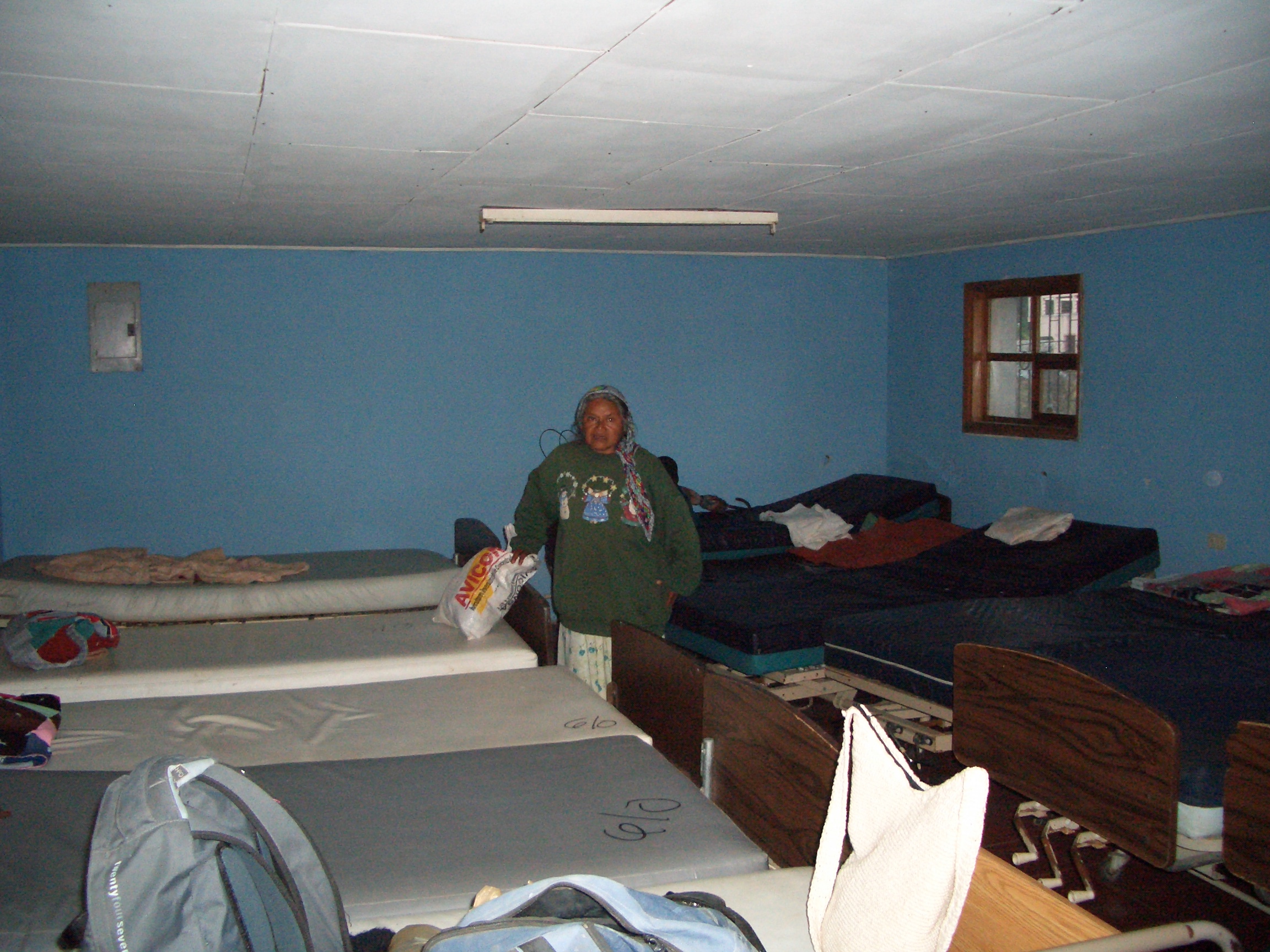
Albergue after
WORKING WITH LA BRIGADA DE LOS MEDICOS — pulling two 3/4 inch botfly larva out of a girl’s scalp — check.
I spent the last week traveling all around the department of Intibuca, Honduras, setting up makeshift medical clinics in rural communities with a brigade of doctors from Ohio. It was an amazing and completely exhausting week. I spent most of my time translating at one or a couple of the clinic stations. We saw all sorts of interesting stuff that had the medical students jumping out of their pants. The most exciting case was definitely the botfly larva. A girl cme in with a serious legion on her head. We had one surgeon on the team providing basic surgeries. He took a look at it and cleaned it up. The girls screamed and he said he had finished. The translater that was working with him said, “no, the mom says that there are worms in there and she can see them.” This prompted a deeper examination and a minor surgery to extract the larva. Two 3/4 inch larva living inside a girls head. Gross. I do not want to be a doctor. But I will work on uploading pictures from the brigade once I get them for all you doctor types. I found myself actually quite knowledgeable about the botfly due to an article I read just before I left. Two days before I left the States my mom handed me a medical journal with an article about a child having a larva removed from just above his eye. My mom had me read the article only to increase my comfort level at coming to Honduras. And what do you know, the information actually came in handy. We also splinted up a boys arm, saw several cases of chicken pox which were only exciting due to their new-found rarity in the states, and saw several cases of Filariasis (when some larva grows into an adult worm inside someone and then dies in their lymph nodes creating a significant swelling, particularly of the lower extremities.) We saw tons of cases of scabies and lice, and now that I am thinking about it, my head did sort of itch this morning…The doctors treated about 300 people a day. People would walk two hours or more to come to the clinic. One night we worked well into dark using wahtever headlamps, flashlights and candles we could find. It was a terrific experience from a public health point of view. Friday night we had a presentation of thanks at the mayors office followed by a terrific dinner and dancing.
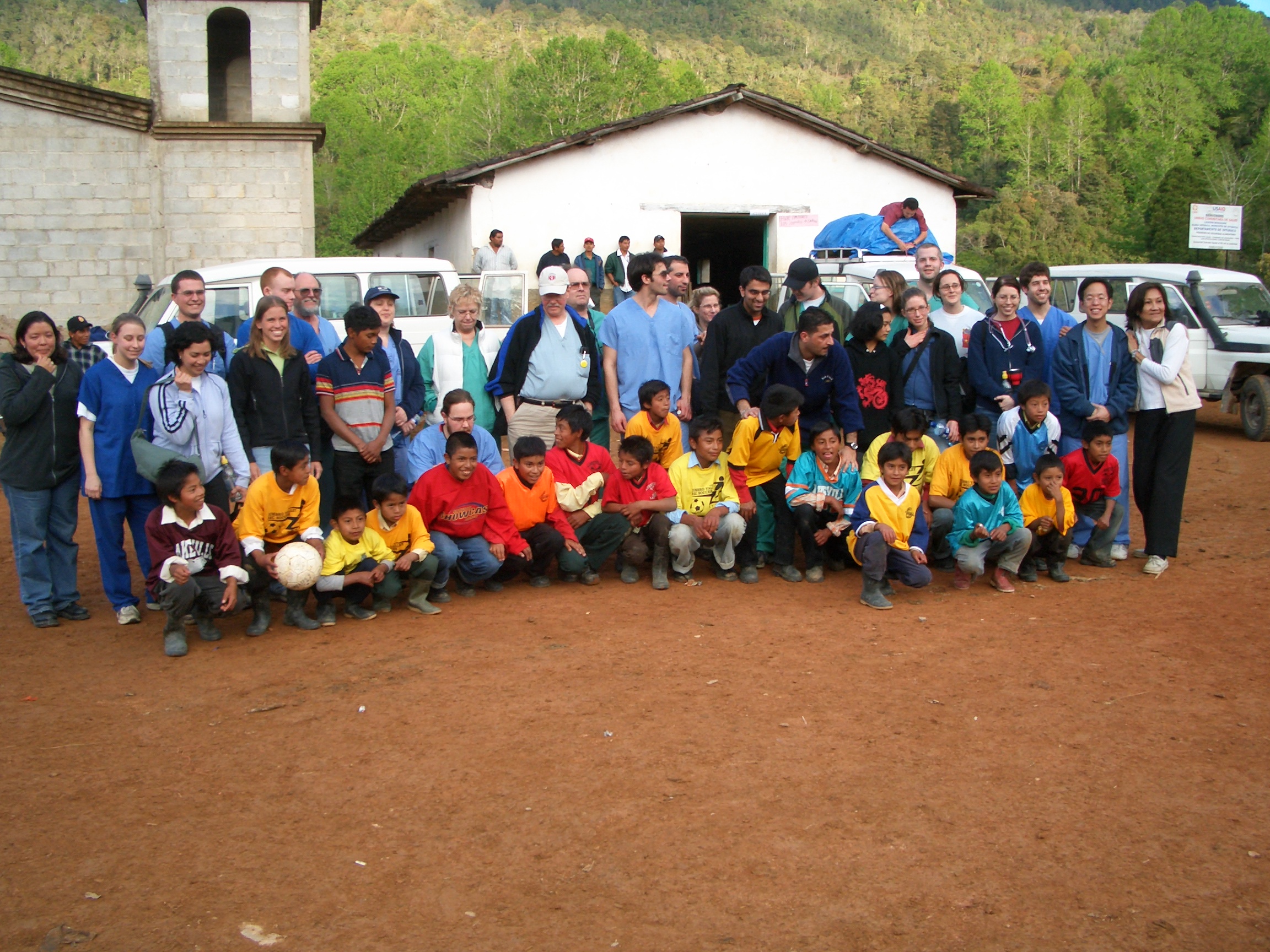
La brigada de los medicos

extracting the botflies

the botflies
Sorry for such a long update. I’ll try to do better about updating more frequently. I wish you all the best of luck against the botflies.
Make a Donation to help pregnant women in Honduras
Posted in Honduras, Public Health on February 26, 2007| 8 Comments »
I need donations to buy food for prepartum women living at the albergue (an the overnight house by the hospital) while they wait to go into labor. The pregnant women at the Albergue have been fairly receptive to my “charlas” on nutrition during pregnancy, infant and child nutrition, breastfeeding, and family planning methods. However, the woman who stay at the albergue are in extreme poverty and they often comment to me that they do not have enough to eat and that they are hungry. The woman are interested to know what they should be eating during pregnancy, but have difficulty acquiring the foods that I discuss in my talk. For about 500 lempiras (a bit less than 30 American dollars) I can buy the women a food or two from each of the four groups that I discuss as being especially important during pregnancy during my weekly “‘Que debe comer durante el embarazo?” charla. During my talk I mention the importance of calcium, protein, iron, and folic acid. I will be able to buy the women enough cheese, powdered milk, eggs, beans (and rice), avocados, and peanuts to last about a week. I would like to set up what will essentially be a little miniature WIC clinic here in La Esperanza. I can tell the woman what they should be eating, and then give them a food from each group. The women can prepare the foods themselves over the out-door stove and will receive practice in consuming foods important to a healthy pregnancy. While these woman are in the later stages of pregnancy, the food and nutrition information will still be extremely valuable. Most woman here take prenatal vitamins only during the first 6 months of their pregnancy. Those are the most important months to take the vitamins and it allows the women (and government programs that try to help support them) to save money. So the woman in the albergue are generally not taking prenatal vitamins, so receiving extra nutrients in their diets is especially important. Further, if I am able to impress upon them the importance of receiving these nutritents during their pregnancy, they may be more likely to consume these foods during the earlier stages of their next pregnancy. They will also be able to share this information with other women back in their villages. Another important advantage of this program is that providing food for the women at the albergue will encourage other women to come to stay at the albergue before giving birth, and this will help to lower extra-hospital maternal mortality.

The Albergue kitchen.


The first week of food donations
So, I am asking for your donations. Just $30 dollars will provide enough food for me to bring in each week. If you are interested in making a donation, please click on the button below.

living in the dark
Posted in Honduras, Travel on February 21, 2007| 8 Comments »
Hola,
Sorry for the delay in communication. Everything is fine here in La Esperanza. We were without power for a couple of days on and off, and about 16 hours straight. A strong storm system moved through town. Temperatures plummeted and the air filled with blowing mist. Rumor is that it was the wind that knocked out the power, but that’s unsubstantiated. Then the entire region of Intibuca had some sort of problem with their internet, and therefore, their phones. But things seem to be working at the moment. The pace of life is slow here, but it becomes a crawl with no power. I guess it is part of the challenge of living in a developing country. It is interesting to talk to people living more normal lives back in the States and to hear about all the things they are doing, like working on projects, or filing taxes, and to realize that the biggest thing I accomplished in the last 48 hours was peeing in the dark. It gets REALLY dark here, darker than I have ever seen it anywhere. When the power is out, you cannot even see the edge of the street you are walking on. The biggest power outage started Saturday night. All us gringos were hanging out at our favorite over-priced bar in town (still about a dollar a beer) when the power cut. The Hondurans all pulled out their cell phones to create some light. Our table had ten people with LCD headlamps out immediately.
Despite the slow pace of life, I have actually been managing to make some headway on my project. I am working on setting something up to receive donations for food for the woman in the Albergue, and hopefully that will be up soon. I am going to try to bring food in once a week, every tuesday, and give small talks, or “charlas” every Tuesday and Thursday. Monday, Tuesday, Thursday, and Friday I also make rounds with the woman at the hospital who have either just had an abortion, or just given birth. I enocurage birth control and discuss possible options. I also discuss infant and child nutrition and answer any questions they might have. Today a woman asked me if it mattered what she ate while she was breastfeeding. I said not really, as long as she ate a bit more than usual and she said that she had heard that she couldn’t eat anything green. She was really dissappointed becuase it’s green mango season here now, and she loves them. All Hondurans seem to love unripe mangos. They peel them, cut them up and but salt and chili sauce on them. I’ve been trying to acculturate myself by buying them off of the street vendors. At first its a bit weird to be eating unripened fruit, but its grown on me. I assured the breastfeeding woman that she could continue to eat her mangos. It looks like Wednesdays I will be working with CARE — pronouced “ca-ree.” Its a combo Honduran, USAID project that provides supplemental food and nutrition information to pregnant and breastfeeding woman and infants and children up to age 2, who live in rural areas (sound familiar?) I’ll be traveling all around the region of Intibuca with the group. A bunch of doctors from some midwestern state are coming to La Esperanza March 5-9. The doctors will be traveling with CARE for the week, and I have also been asked to come along, with the promise that I won’t have to translate the whole time. Either way, it sounds like fun.
On our spare time, all us volunteers have also been painting a center in town for children who are born to unwed mothers. The children stay at the center all day while their mothers work, mostly at the market. It was a depressing place that smelled of urine and looked like something on those 20/20 type news specials. We’re working on a solid cleaning and a munch needed new coat of paint, and the place looks better already. Its amazing how fast 15 people can paint a room.
I had a lovely Valentine’s day, possibly one of the best ever. I was incredebly sad to be away from my boyfriend, and to have missed out on the traditional chocolate from my mom, but it was still a pretty great day. I got to spend a day thinking about a boyfriend who loves me, even though we are 2,000 miles apart. After a great chat with the woman at the Albergue all of the children and my host mother and I all took a grand hike up the mountain behind our house. It was a terrific muddy adventure and provided great views of our part of the city. And then after the hike, because it was still relatively early in the evening, I got a reasonably high pressured (and therefore, fast) freezing cold shower. I was just so excited to be able to have lots of water and be able to go quickly, I was ecstatic. It’s amazing how my standards have changed.
Last weekend I took a small trip with the my host mother and the kids. We took a short bus ride to a nearby water park down in the valley by a river. It was peaceful and quiet and clean, and a nice change from the city. We walked by the river, and though the cold front was already moving in, it was warm enough in the valley for a couple of the kids to jump in the pools. I got to spend most of a day just talking and joking with my host family and practicing Spanish.
My birthday is tomorrow and I have been working for a week solid to gather all of the necessary ingrediants to make chocolate chip cookies, and I think I have managed to collect them all. Hopefully it all works out well and the children like them.
I had better head out because we are about to take a tour of a genuine Honduran winery (I have a feeling we will be traveling half an hour to look at a bathtub, but we’ll see how it goes.)
Warm weather has returned here, and I am stoked. I send any of you suffering through a cold spell warm carribean thoughts.
Adios,
Erin
People do not walk their dogs here
Posted in Honduras, Thoughts, Travel on February 15, 2007| 4 Comments »
They do walk their pigs, horses and bulls.
Hi, I’m Erin
search this site
Pages
- Resume
- Writing
- Regulation of Associated Health Plans
- Tackling Obesity through Agricultural Policy
- Facilitating Access to Reproductive Health Care for Urban Teens
- Letter to the Editor re: DIA Redesign Plans
- Infant Health in Wigan, England during the First World War
- An op-ed — with the swipe of a pen, 25 percent of American children eat more vegetables
-

Yes, I tweet, sort of
Tweets by erinashmiller-

Top Posts
Tags
ASPE Dan engagement family friends Grad School health policy Honduras Italy life new years New York City preparedness Public Health Recipes South America study abroad techy stuff Thoughts tourist sites Travel Washington DCCategories
- Health Policy (5)
- Honduras (33)
- Italy (15)
- New York City (25)
- Public Health (32)
- Recipes (2)
- Reviews (1)
- Seattle (4)
- Thoughts (72)
- Travel (62)
- Washington DC (15)
My projects
Volunteering Links
Other Links
 You can get to
 Erin Miller